

I must confess, I frequently am prone to think about my own well-being, my own future, my own goals, and my own dreams more than those of others. There is nothing wrong with considering your own well being. After all, every person is accountable for his/her own life. However, how often do we think of others and consider their needs and well being? As a matter of fact, how often do we think of our children and the generations to come after them?
7 The people served the Lord all the days of Joshua and all the days of the elders who outlived Joshua, who had seen all the great work of the Lord which He had done for Israel. 8 Then Joshua the son of Nun, the servant of the Lord, died at the age of a hundred and ten. 9 And they buried him in the territory of his inheritance in Timnath-heres, in the hill country of Ephraim, north of Mount Gaash. 10 Also, all [the people of] that generation were gathered to their fathers [in death]; and another generation arose after them who did not know (recognize, understand) the Lord, nor even the work which He had done for Israel.
Judges 2:7-10 (AMP)
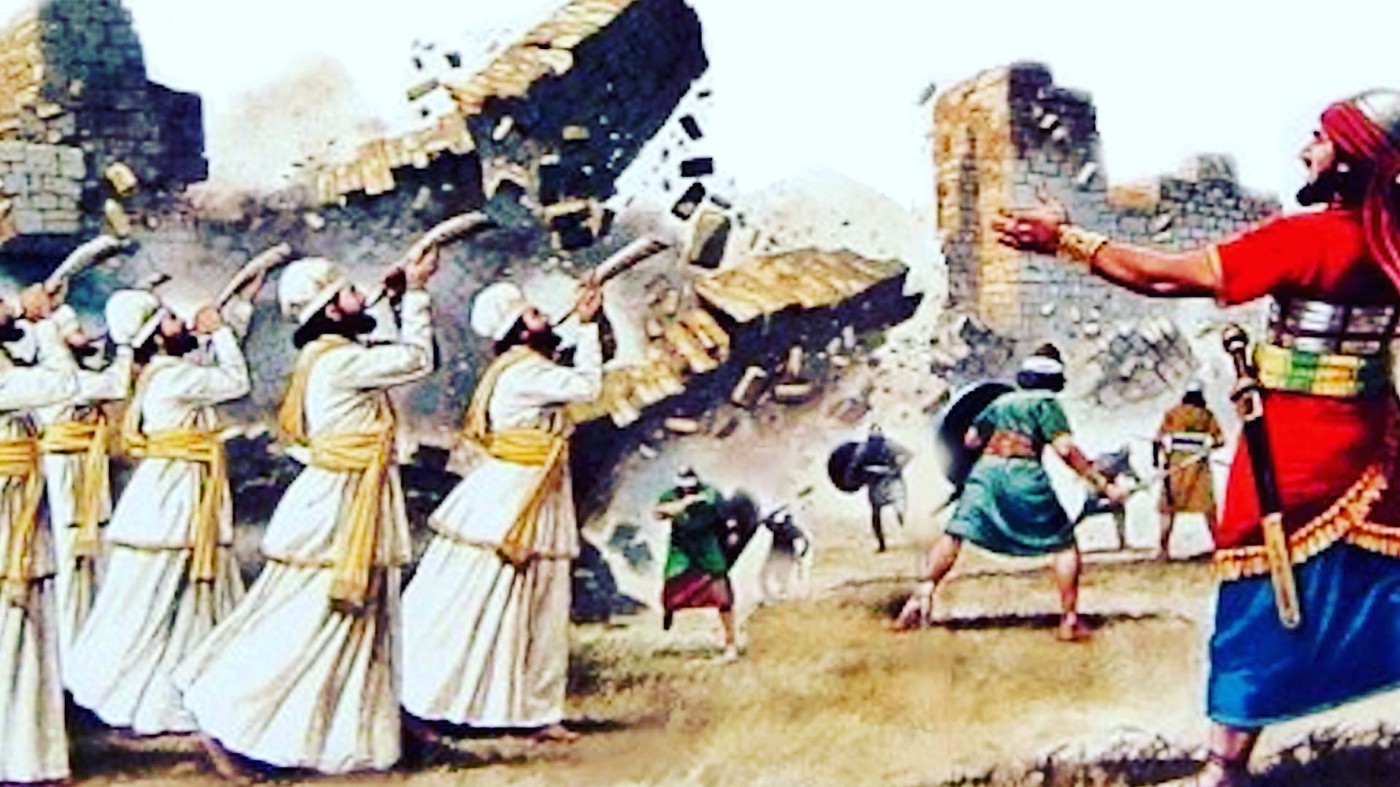
In the account of the book of Judges, Joshua and the generation of Elders, who led Israel into the Promised Land, died. You would expect that the ones to come after them would take up the mantle of spiritual, military and administrative leadership in a seamless transition. Instead, there is a crisis! After the Joshua generation died, the following generations did not know, recognise, or, quite frankly, were not interested in the LORD or even in His mighty works.
This fact is mind-blowing seeing that these persons would have personally seen and heard all that God did. Even if they did not witness God’s work in Egypt, or remember what He did in the wilderness, they should have heard the stories of the Exodus and the 40 year wilderness journey. They also should remember, or should have heard of, the fall of the walls of Jericho, the lesson of obedience learned when they were defeated by the city of Ai, the many victories they had throughout the land of Canaan, and the teachings and warnings by Joshua. But, somehow, they didn’t know, or most likely ignored, all of these things.
How important is it to consider generations? Ask Pharaoh who caused many Israelite babies to be thrown in the river Nile. Ask Herod who killed many babies with the hope of killing the Christ child. Everything begins with the birth of a child and the start of generations.
Do we have a responsibility to protect them? How should we engage in protecting them? Let’s see how we must intervene in saving our Generations.
HOW MUST WE INTERVENE?
#1: Intervene through Prayer and Fasting.

15Blow the trumpet in Zion; consecrate a fast; call a solemn assembly; 16 gather the people. Consecrate the congregation; assemble the elders; gather the children, even nursing infants. Let the bridegroom leave his room, and the bride her chamber. 17 Between the vestibule and the altar let the priests, the ministers of the Lord, weep and say, “Spare your people, O Lord, and make not your heritage a reproach, a byword among the nations. Why should they say among the peoples,‘Where is their God?’”
Joel 2:15-17 (ESV)
In Joel 2, the people were encouraged to call and consecrate a time of fasting. This fasting was not just an individual one for individual needs. It was one that involved every sphere of society. The people were encouraged to “gather”, which included the Elders, Priests, Bridegrooms and Brides, and even the Children (including the nursing infants). It is intriguing that children are mentioned here in this consecration. This shows that this call to fasting (this consecration call) was not just for the nation, it was for the survival of the upcoming generations.
Praying and Fasting must have the purest of intentions. Joel 2:17 shows what must be said when crying out to the Lord; “…spare your people, O Lord, and make not your heritage a reproach, a byword among the nations”. Then the question is asked later in verse 17, “why should they say among the peoples “where is their God?”. We therefore see here that:
- Prayer and Fasting must involve a genuine act of repentance.
- Prayer and Fasting must focus on the wellbeing of others, in particular the nation and the generations to come.
- Prayer and Fasting must prioritize God receiving glory.
Then I proclaimed a fast there, at the river Ahava, that we might humble ourselves before our God, to seek from him a safe journey for ourselves, our children, and all our goods. For I was ashamed to ask the king for a band of soldiers and horsemen to protect us against the enemy on our way, since we had told the king, “The hand of our God is for good on all who seek him, and the power of his wrath is against all who forsake him.” So we fasted and implored our God for this, and he listened to our entreaty.
Ezra 8:21-23 (ESV)
#2: Intervene through Biblical Discipleship.

40 And with many other words he bore witness and continued to exhort them, saying, “Save yourselves from this crooked generation.” 41 So those who received his word were baptized, and there were added that day about three thousand souls. 42 And they devoted themselves to the apostles’ teaching and the fellowship, to the breaking of bread and the prayers.43 And awe came upon every soul, and many wonders and signs were being done through the apostles. 44 And all who believed were together and had all things in common.
Acts 2:40-44 (ESV)
We see here that the Word that Peter preached led to a series of developments:
- The people received the Word, were saved, and got baptized.
- They became devoted to further Apostolic teaching.
- They became devoted to Godly fellowship.
- They witnessed the manifest power of God.
- They had all things in common.
All of this started because they chose to listen and respond to the Word of God. Their decision to listen to the Word impacted not just their lives but impacted them collectively. This was all part of the Apostles outreach to the next generation of believers. This represented effective Biblical Discipleship.
What therefore must we teach to others? We must teach the undiluted Word of God. It’s not about teaching things out of context or teaching what we feel. That was not what the Church was birthed on. Instead, we must teach the generations here and those that are to come what the Word of God says about:
- The Nature of God
- God’s requirement for Holiness
- His sacrifice, resurrection, and return
- The work of the Holy Spirit (Salvation, Justification, and Sanctification which all lead to Kingdom living)
- Handling everyday situations and making life choices
- The realm of the Spirit and Spiritual Warfare
#3 Intervene through Biblical Parenting.

And these words that I command you today shall be on your heart. You shall teach them diligently to your children, and shall talk of them when you sit in your house, and when you walk by the way, and when you lie down, and when you rise. You shall bind them as a sign on your hand, and they shall be as frontlets between your eyes. You shall write them on the doorposts of your house and on your gates.
Deuteronomy 6:6-9 (ESV)
Here is something that we must realize: Studying the Word of God would always remain an incomplete task if it is not taught to your children. The Word of God was not just made for personal development. It was made for inter-generational impact. The Word is the ultimate teacher of Biblical Parenting.
Discipline your son, for there is hope; do not set your heart on putting him to death.
Proverbs 19:18 (ESV)
7 It is for discipline that you have to endure. God is treating you as sons. For what son is there whom his father does not discipline? 8 If you are left without discipline, in which all have participated, then you are illegitimate children and not sons.9 Besides this, we have had earthly fathers who disciplined us and we respected them. Shall we not much more be subject to the Father of spirits and live? 10 For they disciplined us for a short time as it seemed best to them, but he disciplines us for our good, that we may share his holiness. 11 For the moment all discipline seems painful rather than pleasant, but later it yields the peaceful fruit of righteousness to those who have been trained by it.
Hebrews 12:7-11 (ESV)
Biblical Parenting would lead to us effectively doing the following:
- Loving children (includes appreciating, correcting, and protecting them)
- Teaching and nurturing children
- Spending time with children (for learning and for fun)
#4: Intervene through Leadership Training and Development.

All Scripture is breathed out by God and profitable for teaching, for reproof, for correction, and for training in righteousness, that the man of God may be competent, equipped for every good work.
2 Timothy 3:16-17 (ESV)
Obey your leaders and submit to them, for they are keeping watch over your souls, as those who will have to give an account. Let them do this with joy and not with groaning, for that would be of no advantage to you. (HEBREWS 13:17 ESV)
Hebrews 13:17 (ESV)
The generations to come are also the leaders to come. There policies, decisions and teachings would impact our lives and the lives of the generations that would even follow their generation.
Leaders in the Kingdom of God have a responsibility to be competent and equipped. This is achieved through the teaching, reproof, correction, and righteous training of the Word of God.
Hebrews 13:17 shows us something interesting though. It shows us that we, as believers, have a responsibility to obey and submit to our leaders. It goes on to say that these leaders “are keeping watch over your souls” and that they must “give an account” for such a responsibility. It ends off by highlighting the need for leaders to have the right attitude while carrying out their task.
Now, imagine if we do not impact our generations now and those to come with the Word of God. Would we have the ability to submit to poor, ungodly leadership? Our entire generation is being attacked by the enemy because the leadership potential of the incoming generation must be attacked.
In Judges 2, an entire nation began to fall because the generation ignored the Law of God that was taught to them by Joshua and the Elders before. Godly leadership should not be limited to the lifespan of a Godly man or woman. It should reflect the eternal longevity of God, meaning it should go on and on throughout the generations. As a matter of fact, all of the factors that we mentioned before (Prayer and Fasting, Biblical Discipleship, and Biblical Parenting) all would lead to Godly Leadership development and effective transitioning in Leadership.
And remember, even when the Leadership of this world crumbles and becomes corrupt, the Leadership in the Kingdom must always remain true and circumspect.
Conclusion

As a pastor and teacher, interacting with young people truly brings insight and revelation into the current state of society. You really get to see how much of an intervention must be made for our present generation and the generations to come. As Holy Spirit-filled and led people, we must understand the Holy Spirit’s ability to help us to make an impact, to engage in the saving of our generations for the Kingdom of God.

