
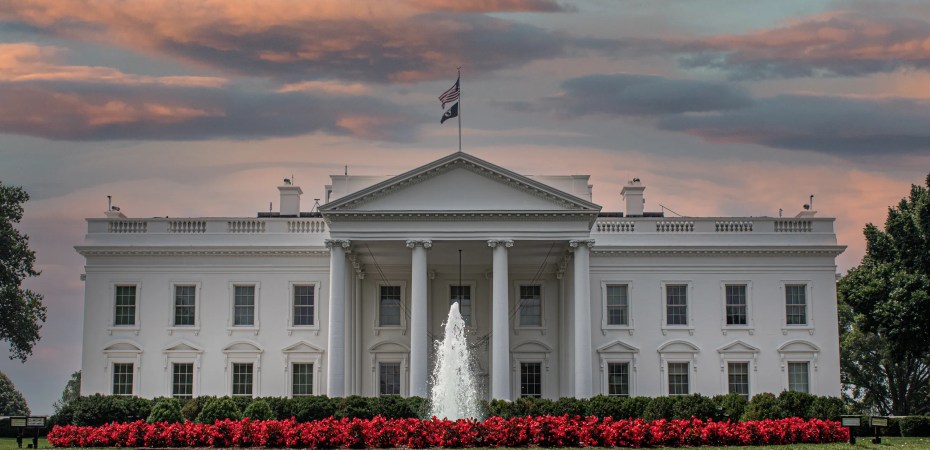
Disclaimer: The following post does not express any prescribed political view or specific support for any presidential candidate.
In an article dated Sunday, 20th October 2024, Alex Seitz-Wald of NBC News wrote, on the media entity’s news website, that both Kamala Harris and Donald Trump “highlighted less of their personal faith” on this 2024 United States (U.S.) Presidential campaign trail “than any other election campaign in recent memory“. Alex further states that the U.S. is becoming “an increasingly secular country” and that this fact could have prompted both candidates to focus less on highlighting personal faiths. This is a great contrast to past elections, where many candidates frequently quoted scripture, did their best to coerce Christians to vote, and even went to the point of visiting prominent churches and their services and addressing the congregants. President Joseph Biden, a professing Catholic, highlighted much of his faith during the 2020 election campaign trail. Many Republican candidates in the past have also highlighted many Christian values, as the party is seen as a more “conservative” entity which borrows and mirrors much of the views of conservative, evangelical Christianity (also many might also disagree with this notion). Even Barack Obama’s religion was a topic of major discussion when he first ran for president in 2008. Kamala Harris and her running mate, Tim Walz, took the initiative of recently attending church services in Atlanta, Georgia and Saginaw, Michigan respectively. However, such steps have come much later than recent political attempts in past elections. It begs the question, “does faith still have a place in politics?” or quite possibly this question, “should faith have a place in politics?“
Addressing the Issues and Having a Response
In a poll conducted from September 16-28, 2024, the U.S-based global analytics and advisory firm, Gallup, reported that Americans saw the following as the most pertinent issues for them to vote on for the upcoming November 5, 2024 presidential elections:
- The Economy
- Immigration
- Foreign Affairs
- Healthcare
- Abortion
- Climate change
- Supreme Court Justice picks
These issues have been at the forefront of the last two or three election campaigns. Much was therefore done to sway Christian voters towards adopting whatever desired stance the specific candidate had. Of course, with the U.S. becoming “more secular”, the issue of Christians associating with politics in any form would raise its head in such prominence that it becomes unavoidable. Would the presidential candidates conform to Christian views concerning these topics, or are Christians expected to conform to whatever the majority view in the general consensus of society is?
In 2020, I wrote the following article on the heels of the then U.S. Presidential election, which was contested by Joseph Biden, under a Democratic party ticket, and Donald Trump, under a Republican party ticket:
The article addressed three key points about our response, as believers, to political elections:
- (i) We are firstly Kingdom citizens, according to Philippians 3:20 which says “But our citizenship is in heaven, and from it we await a Savior, the Lord Jesus Christ“.
- (ii) We have a duty to governments and leaders, which is articulated in 1 Timothy 2:1-2 which says, “First of all, then, I urge that supplications, prayers, intercessions, and thanksgivings be made for all people, for kings and all who are in high positions, that we may lead a peaceful and quiet life, godly and dignified in every way.“
- (iii) Our task is not to necessarily depend on the governments that be. Instead we are to be impactful and take action to see Kingdom transformation. This is highlighted in 1 Thessalonians 4:11-12, which says, “And to aspire to live quietly, and to mind your own affairs, and to work with your hands, as we instructed you, so that you may walk properly before outsiders and be dependent on no one.“
These three points highlight not only what our response to elections should be but also what our response to politics in our current world system should be. Our focus must be firstly on the fact that we are Kingdom citizens. Therefore, we adhere firstly to the principles of the Word of God and by the leading of the Holy Spirit. Anything (and I mean anything, whether it comes from a President, Prime Minister, or Monarch) that goes contrary to this should not be supported or followed. Secondly, our duty to governmental leaders is highlighted where we are to make supplications, prayers, intercessions, and thanksgivings for them. Basically, we must pray for them. Thirdly, and finally, we are not to “depend” on our governments (even though we would benefit from the services that they offer and manage). Instead, we are to also make a Kingdom impact in our society. The idea is that our lives and unity must show the powers that be how the Kingdom operates. When we stray away from this is when we start experiencing trouble.
Faith and Politics: Friends, Foes, or Neither?
In answering the question, “should Faith have a place in Politics?” it is important for us to analyze both the Faith and Political systems. Faith is essentially a Holy Spirit-led and birthed ability, which causes us to rely on the Word of God and live by it (for more information on Faith, check out the 3-part article series “The Faith Life Parts 1, 2 and 3“). Politics is basically the birthing mechanism to the creation, management and execution of our government offices, institutions, and executive powers. Politics is a machine that operates (or should operate) strictly based on the constitution and legislature of the particular country. This means that Politics can, at times, adhere to Biblical principles, and would also, at times, stray from it. For example, politics would dictate that a candidate for the seat in government give an opinion on an issue, such as same-sex marital rights, that goes according to the majority. However, Biblically, same-sex marriage should not be supported. Politics would therefore dictate that a candidate do everything that they can to obtain and keep votes. Faith, on the other hand, could sometimes dictate that you do things to refrain from pleasing everyone. The aim of politics is essentially to please the masses and maintain power, while the aim of Faith is to please the Lord and realise that He possesses all power.
Now this does not mean that politics is something evil. 1 Timothy 2:1-2 already tells us to “pray” for political leaders, whether we like them or not, or agree with them or not. In the same way, Ephesians 6:1 tells us to “obey our parents in the Lord“. This does not mean that we obey everything they tell us to do. Instead we obey them in the Lord, or rather, according to all that is right in the sight of God. However, we are still also called to respect the institution of parenthood, whether our specific example/s of it that we are exposed to are grounded or flawed. Politics presents a mechanism and medium through which God can intervene in the affairs of men, just as Parenthood is. Daniel 2:21 highlights this clearly:
He changes times and seasons; he removes kings and sets up kings; he gives wisdom to the wise and knowledge to those who have understanding; – Daniel 2:21 (ESV)
God can impact nations through political systems. This can be to either bless a people or to cast judgment on such people. He may desire to bless and help a people, as He did with providing King David. David was the king through whom the covenant promise of the Messiah would come to fruition. As a result, Israel became blessed and strengthened – spiritually, economically, and militarily. God can also cast judgment on a nation through leadership. Hosea 13:11 tells us, “I gave you a king in My anger, and took him away in My wrath“. This therefore shows that Politics, on its own, can act as an instrument of God in intervening in the affairs of mankind.
This means that God can cause persons to impact political systems for His glory and His Kingdom’s cause. King David and the Prophet Samuel led major spiritual reforms throughout Israel, King Darius allowed the Jews to return to Jerusalem to rebuild the city after their 70-year exile, and even William Wilberforce, a British politician-turned-evangelist, led the movement to abolish the Trans-Atlantic slave trade. Such impact would not have occurred, or would have become more difficult, without the mechanism of politics. It is therefore clear that believers can have a place in politics, whether to run for office in it or vote according to its requirements for desired candidates.
It must be considered, however, that political systems are quite “dark”, with many going completely against Biblical principles. Therefore, it would be difficult for a few believers to make any worthwhile impact if God has not truly called them to partake in such movements. Many Christians who enter politics, with the goal of making a change for Christ, end up succumbing to the lust of the flesh, the lust of the eyes, and the pride of life. Politics brings power (to varying degrees) and such power, minus the guidance of the Holy Spirit, can corrupt absolutely.
Should we have anything to do with Politics?
The answer is yes, according to the conviction of the Holy Spirit. For the general individual, they can be encouraged to vote based on who they like the best, or who they feel gravitated to the most. For the believer, voting has to be based on the Kingdom, for our allegiance is firstly and always to God’s Kingdom. Believers should also feel free to refrain from voting if their conscience does not allow them to vote for any candidate. However, personal responsibilities to the enacting of public policies and the creation and management of institutions must be considered, with that personal responsibility being one’s personal right to vote. Maybe Donald Trump and Kamala Harris might refrain from expressing their faiths with the increased secularization of America, but believers don’t have that option. Whether in our voting, our debating, or our daily living, our faith in Christ must be expressed. And who knows, maybe God might want you to vote, or not vote, to be part of His impact in government, whether it be to bring blessing or to bring judgment.
I guess, at the end of the day, we as believers must be willing to either engage in, or refrain from engaging in, political ventures, solely for the sake of God’s perfect will being done. Any reason other than this can lead to compromise.
References
https://news.gallup.com/poll/651719/economy-important-issue-2024-presidential-vote.aspx
 Beacon Of Flavor