

Before reading this article, ensure to check out “The Faith Life (Part 1)” and “The Faith Life (Part 2)”. See the links to the articles below:
In the first two parts of this 3-part article series “The Faith Life”, we explored the five (5) factors that form the foundation of Faith, as well as five (5) ways that Faith can be increased. In this the third and final part, we explore eight (8) practical life applications that can help us to understand, with greater specificity, how to live a life of Faith.
#1: Trust God’s Word, Live by it, and Declare it

Delight yourself in the Lord, and he will give you the desires of your heart. Commit your way to the Lord; trust in him, and he will act. He will bring forth your righteousness as the light, and your justice as the noonday.
Psalm 37:4-6 (ESV)
In “The Faith Life (Part 1)” and “The Faith Life (Part 2)“, we took a look at how the Word of God of God forms the Foundation, and acts as an ingredient of increase, for Faith. As a result, in practically living a life of Faith, it is important that the principles of the Word of God be applied into our very lives. This is seen when we adopt the following three courses of action concerning the Word; (1) Trust it, (2) Live by it, and (3) Declare it!
Psalm 37:4-6 instructs us to “delight” in the LORD. We are also to “commit” our “way” to Him. As a result, He will give us “the desires of” our “hearts”, He will “act” on our behalf for our well-being, and “He will bring forth our righteousness as the light, and our justice as the noonday”. delighting and committing to Him involves understanding, loving, and making a commitment towards following His every Word and all His precepts. You therefore must trust that His Word is true and is powerful, and must live in absolute obedience to what it says. God acting on our behalf and bringing forth our righteousness and justice is all according to His will and for His glory. All these things are done when we understand what it means to live according to the principles of the Word of God. The Word reflects and governs all principles of the spiritual and physical realms. To know, understand, live, and declare the Word is to know the principles that would help you to function as God has ordained you to.
If you desire to know more about how the Word of God is part of the Foundational development of Faith, as well as how it helps Faith to increase, please feel free to check out “The Faith Life (Part 1)” and “The Faith Life (Part 2)“.
#2: Pray at all Times
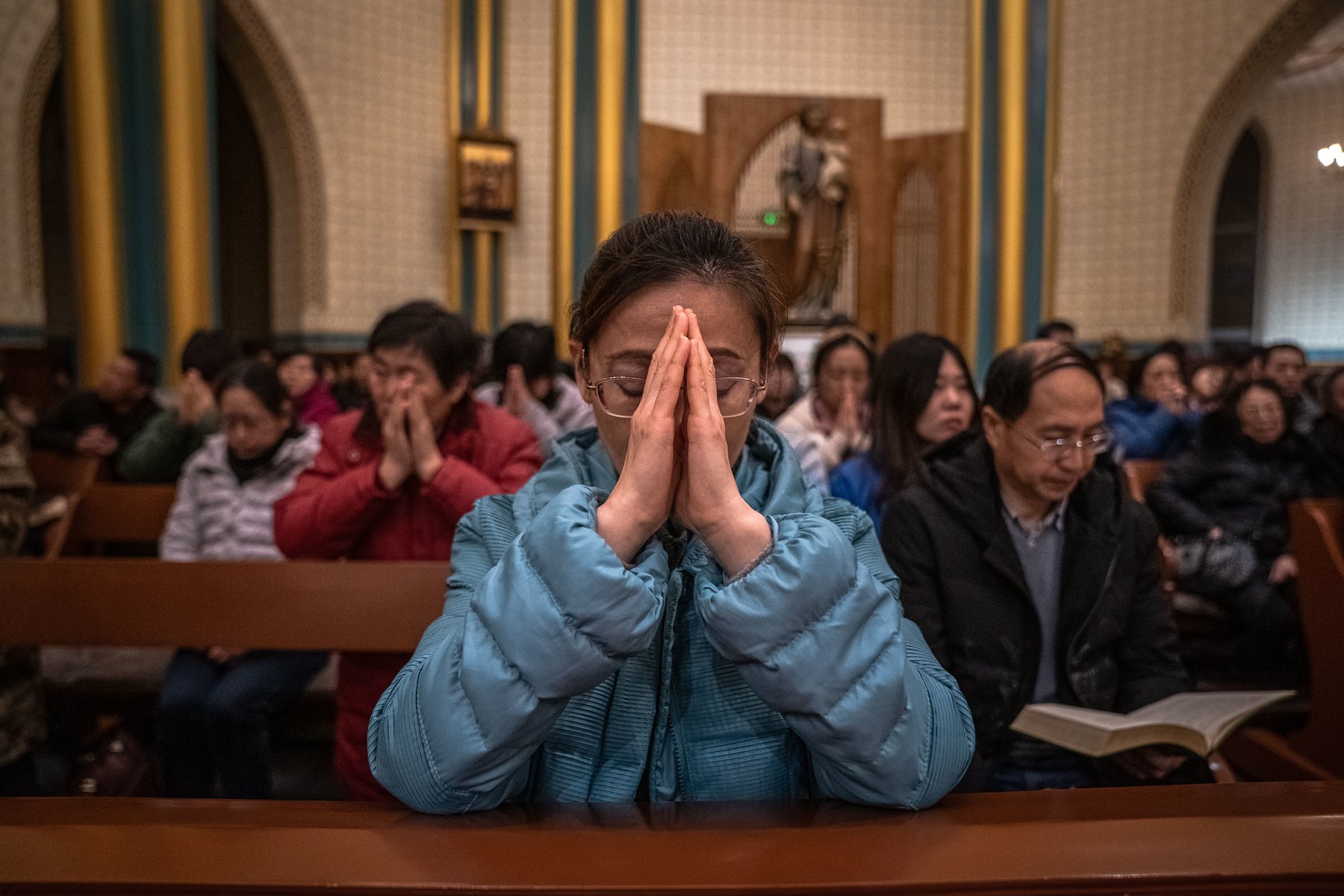
Praying at all times in the Spirit, with all prayer and supplication. To that end, keep alert with all perseverance, making supplication for all the saints,
Ephesians 6:18 (ESV)
Scripture encourages us to pray “at all times” and even “without ceasing”, and this must be done always “in the Spirit”. This means that prayer, which helps in establishing and strengthening a frequent line of communication between us and God, is a Holy Spirit-created and led mechanism and process. Ephesians 6:18 shows us that, when we pray without ceasing (or at all times) in the Spirit, we will be kept “alert with all perseverance”. A life of prayer helps to keep you informed as to the Voice and Will of God, and the general happenings in the realm of the Spirit. The plans of the forces of darkness especially in your own personal life, in your family, your Church, your community, and even your nation and other nations, can be ascertained through effective, fervent prayer. Prayer also helps in touching the very heart of God by getting to know Him, getting to hear what He has to say and is concerned about, and getting to request of Him things according to His will. If you will like to know more about how to recognise and listen to the Voice of God, check out my article “Hear His Voice: Understanding What it Means to Listen to God“.
In praying at all times it is important that we be systematic about it. This means that we must build a system of prayer. Find time to pray and give that time priority. Forsake all distractions and zoom into focusing on what God is saying to you. Also, as you pray, meditate on and pray the Word of God. If you are praying for a particular situation, search for scriptures that deal with that situation and pray according to what they say. If you are praying to draw closer to God, look for scripture passages that speak about drawing closer to God. Observe all the details mentioned in those scriptures and pray according to what they say. Open up your life to the Holy Spirit so that He can help you to pray in the way that you should. He may even call you to pray outside of your designated time, so be open and obedient to His leading. Be consistent in your prayer time, even designation a special place to pray. If you can’t find a special place consistently, focus on at least giving God the time. Build a systematic prayer life, for such a life builds Faith and power in the Holy Spirit.
If you desire to know more about how Prayer acts as part of the Foundational development of Faith, as well as how it helps Faith to increase, please feel free to check out “The Faith Life (Part 1)” and “The Faith Life (Part 2)“.
#3: Live a Life of Thanksgiving

Give thanks in all circumstances; for this is the will of God in Christ Jesus for you
1 Thessalonians 5:18 (ESV)
There seems to be a deep spiritual significance attached to us being thankful. We are encouraged to apply thanksgiving to our lifestyle of prayer. It can even be said that, as seen in 1 Thessalonians 5:18, giving thanks is more of a commandment than an encouragement. A life of thanksgiving is one that (1) accommodates obedience, (2) builds appreciation, and (3) fosters humility. This means that we are walking in the will of God when we are thankful (obedience), we are cognisant of and grateful for God’s intervention, blessings, and keeping power (appreciation), and we recognise that God is the One on whom we are dependent; not on ourselves or on anyone else.
So then, how can thanksgiving be exhibited in our life? Express it in prayer to God. Thank God for who He is. In effectively doing this, it would be beneficial to know and pray the names of God which effectively reveal His nature and character. Also, thank God for what He has done for you, through you, and around you. Thank Him continuously for saving you and giving unto you eternal life. Thank Him for writing your name in the Lamb’s book of life (see Luke 10:20). Thank Him for keeping, healing, delivering, restoring, and providing for you. Thank Him for the persons that He has placed in your life who have been a blessing to you, and thank Him also for opportunities that He gives you to be a blessing. Thank Him for His Word, for the ability to pray, for life, health and strength, for your talents and abilities, for opportunities and self-development, for imparting into others, for everything! A life of thanksgiving can also be expressed to others. Show people that you are grateful to God for them; your husband, your wife, your children, your parents, your siblings, your relatives, your friends, whoever. If you do not know, ask God to reveal to you such persons. Also, see yourself as a Godly light to someone else. All of this is part of a lifestyle of thanksgiving.
#4: Always be ready to Learn

An intelligent heart acquires knowledge, and the ear of the wise seeks knowledge.
Proverbs 18:15 (ESV)
A people who are filled with Faith are a people who are always ready to learn; to learn about God, His Word, His Son, His Holy Spirit, etc. The Faith Life involves a Holy Spirit-led desire for knowledge that works along with our God-given intelligence, senses, and abilities. There is much to learn about our limitless God (we will be learning about Him for all eternity), so do not see it as any light matter that you are called be a student of His. However, in gauging properly your acquisition of knowledge concerning Him, He has given unto us His Word and His Holy Spirit.
Proverbs 3:5-6 encourages us to “trust in the LORD with all our hearts” and not to “lean” on our “own understanding”. This is a significantly important principle in successfully living a life of Faith. It shows that God does indeed cherish the acquisition and possession of knowledge, but such knowledge must work in tandem with the guidance of the Holy Spirit and the Word of God, and not necessarily depended on. True wisdom, revelation, knowledge and understanding comes from the LORD. Therefore our ability to learn is not a conceited or prideful effort. Learning is, in fact, a representation of how God works.
Take time to study His Word, as well as to research and use tools such as concordances, commentaries, and the like. Also, besides Biblical material, it’s important to have a wealth of knowledge of various topics, such as science, politics, geography, economics, other religious beliefs, sociology, psychology, etc. A wealth of knowledge acquired and understood can help open doors of opportunity for you to relate with many persons, thereby allowing you to also share the Gospel message with them.
#5: Be Patient with Yourself and with Others

But they who wait for the Lord shall renew their strength; they shall mount up with wings like eagles; they shall run and not be weary; they shall walk and not faint.
Isaiah 40:31 (ESV)
Patience can be defined, ultimately, as the Holy Spirit-birthed and led ability to “wait on the LORD”. Waiting on the LORD involves being still before Him, obedient to Him, and trusting Him in every way that He guides you. It is trusting that His will and purposes will be fulfilled, and that such a will and purpose will work out for your own well-being and for the well-being of all those who trust in Him. Patience is a tool used by the Holy Spirit to also give us foresight into what the LORD desires to do in and through us, as well as others, and it also helps us to develop Godly perspectives about situations in our own lives, Churches, and Society at large. Many times we might think that a hurried response will allow us to be efficient and fervent in bringing forth solutions. However, Patience helps to put all things into proper perspective. Patience also helps develop our dependence on God and therefore acts as, what I would like to call, an “idolatry killer”. A lack of Patience is a representation of dependence on self. Such a lack makes it appear that we have the power and solution to bring about desired results. However, in truth, only God truly has such a power and such solutions. Besides, some of these very “desired results” would only lead to our destruction. Therefore, a life of Faith – a life that truly pleases God – must be one where Patience is exemplified.
This then leads us to also understand that Patience must be exhibited towards ourselves and towards each other. As believers, each of us are developing, on step at a time, and we must trust that Holy Spirit-led process of development. If we want to rush through our spiritual development, and try assuming responsibilities that we are not prepared for, it can harm us tremendously. Patience helps us to appreciate this process and to witness the step-by-step handiwork of God in our lives, which evidently establishes in us a life of repentance (the goodness of God leads to repentance – see Romans 2:4) and leads us closer to Him. Patience must also be seen from us towards each other. Just as we are developing, others are also developing. Patience therefore helps in incubating a culture of Love, thereby growing in us a life of Faith.
#6: Be a Peacemaker

Blessed are the peacemakers, for they shall be called sons of God.
Matthew 5:9 (ESV)
During the Sermon on the Mount, Jesus mentioned a series of principles which are popularly referred to as “the Be-Attitudes”. One of them, found in verse 9, beckons to us to be “peacemakers”, as it qualifies us as being “sons” or “children of God”. This encouragement goes beyond telling us to be “at peace”. It goes a step further to show us that, as people who have found the peace of God, we must position ourselves to be establishers of peace among our brethren and humanity as a whole.
Romans 14:17 tells us that, “the Kingdom of God is not meat nor drink, but Righteousness, Peace, and Joy in the Holy Ghost.” Peace is one of the three key expressions of the Kingdom of God and its ideals in this world. This means that, essentially, a person representing the Kingdom of God must be a purveyor of both internal and external peace. Your life must reside in the comfort and security of the Prince of Peace, and it must spill over into your effort of establishing Peace. Being a Peacemaker therefore involves facilitating unity, encouraging your fellow brothers and sisters, bringing about conflict resolutions, and being careful as to not speak slanderously or encourage gossip or any other form of loose, sinful speech.
#7: Give Generously and Cheerfully

Each one must give as he has decided in his heart, not reluctantly or under compulsion, for God loves a cheerful giver.
2 Corinthians 9:7 (ESV)
Giving is an essential aspect of developing a life of Faith. It is the outward expression of the Holy Spirit’s power and revelation that God would have us to show forth within our physical realm. Giving is an obedient response to the call of God to issue to others (as well as to Him), sacrificially, of your time, energy, and resources. These three resources represent some of the most precious factors given to us to be stewards of (please note that we are stewards of these and not owners). Giving therefore helps us to have a Godly expression, stewardship, and impact in this realm of reality.
As 2 Corinthians 9:7 shows us, Giving must be decided in the heart. This shows that, although it is Holy Spirit-led, Giving is also contingent on our decision-making (which should be guided by the Holy Spirit). This is exemplified more when the said scripture continues to tell us that it should be “not reluctantly or under compulsion“; we are called to be “cheerful givers“. Therefore, in living a life of Faith, let Giving be paramount. This is not extortion, or beckoning people for money only, or forcing people into giving amounts to acquire “blessings”, or issuing gifts to the less fortunate for photo opportunities. Instead, it is expressing the compassionate and loving attributes of God to a World that is in need of Him, whether in giving to them tangible supplies for their physical needs (food, clothing, shelter, etc), or in giving to them spiritual intangible truths and revelations for their spiritual needs (the Gospel, teaching the Word of God, impartation of the power of the Holy Spirit, etc).
#8: Be a Person of Integrity

Whoever walks in integrity walks securely, but he who makes his ways crooked will be found out.
Proverbs 10:9 (ESV)
Finally, as believers who seek to live the Faith life, it is imperative that we walk in Integrity. Integrity involves the way of life that is void of sinful practices and is always cognisant of walking in obedience to the Word of the LORD. A man or woman of integrity is always concerned about pleasing the LORD and walking in His ways. Integrity is therefore the key tool, used by the Holy Spirit, to strengthen our testimony, in light of the fact that such a testimony depends on the Holy Spirit’s guidance. Another important aspect of Integrity is its ability to help us become Godly examples to others, and not necessarily just for our own well-being. Proverbs 20:7 tells us that when someone walks in integrity their children will be blessed. This shows that there is an intergenerational impact associated with living a life of Integrity. Such a life of integrity, as mentioned before, is dependent on absolute surrender to Christ. This is because a life of integrity is the life of Christ being lived in us.
If you desire to live a life of Faith, live a life of Integrity. Firstly, depend on the Holy Spirit to help you in this regard. Then develop the personal discipline to know how to react in various scenarios. Know when to speak and what to speak, even when to remain silent. Temptations are the enemy’s tactics in counteracting efforts of Integrity, so we must learn how to resist them (such resistance starts with submitting ourselves to God – see James 4:7). Circumspect walking is required and is strengthened by a life of Integrity, which is a life that exemplifies all the foundational lessons, all the growth factors, and all the practical applications that lead to the Faith Life.
Conclusion
The Faith Life must be understood and lived, as it is the life that God desires for us to live. Faith is what truly pleases God, so therefore we must understand what it truly is. As you read through and meditate on this and the previous two-parts of this article series, think about what are the foundational pillars of Faith, what causes it to increase, and how it is practically lived. Consider, in a special way, the significance of the Word, Prayer, and reliance on the Holy Spirit. The Holy Spirit is the One who gives us Faith. This means that our ability to have Faith, and therefore to please God, is contingent on us having the Holy Spirit (see Romans 8:14-17). You receive the Holy Spirit when you know Christ as Lord and Saviour, so receive Him today. If you are believer, know that you do have Faith but that God desires that your Faith increase. Implement the factors needed for the increase of your Faith. Receive Him today, surrender to Him today, and watch as He helps you to life “the Faith Life”.
 Beacon Of Flavor
[…] The Faith Life (Part 1) – Five Foundational Lessons about Faith The Faith Life (Part 2) – Five Ways to Increase Your Faith The Faith Life (Part 3) – Eight Practical Life Applications of Faith […]