
I was listening to the song “the Blessing” done by Kari Jobe, Cody Carnes, and Elevation Worship. After listening it, the Holy Spirit drew my attention to the scripture that was used as the basis of the song (Numbers 6:22-27). The scripture passage goes as follows:
“And the LORD spake unto Moses, saying, Speak unto Aaron and unto his sons, saying, On this wise ye shall bless the children of Israel, saying unto them, The LORD bless thee, and keep thee: The LORD make his face shine upon thee, and be gracious unto thee: The LORD lift up his countenance upon thee, and give thee peace. And they shall put my name upon the children of Israel; and I will bless them.”
Numbers 6:22-27 (KJV)
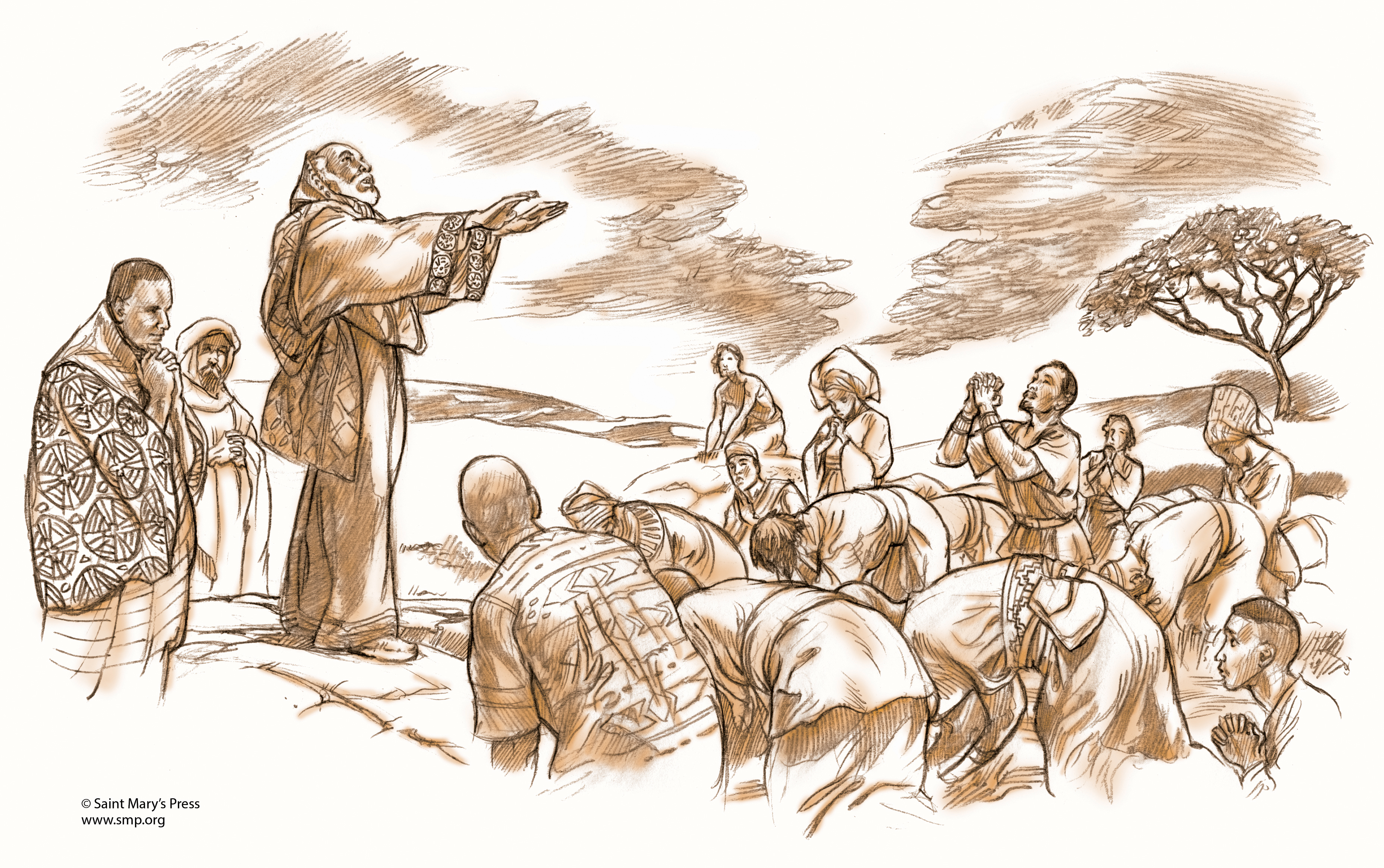
Copyright © Saint Mary’s Press
In Christianity, this passage of scripture is frequently referred to as “The Priestly Blessing”. In looking at it initially it does seem to simply be “just” a blessing given by the High Priest over the children of Israel for ceremonial reasons. As a matter of fact, we might recognize it for similar ceremonial reasons as we use it frequently as a benediction at the end of a service. But I began reading the entire 6th chapter of the book of Numbers and the Holy Spirit helped me to see something quite impactful, something that I totally missed.
God has given us the opportunity to make our requests known unto Him. Of course, He is sovereign and knows what is best for us, so sometimes such requests may be met with a “yes”, a “no”, or a “wait” answer. But this request, this blessing in Numbers 6 was not requested of by the children of Israel. This was God’s desired blessing to pray over them. It means that whatever is mentioned here is (i) dear to His heart, (ii) something He aims to achieve, and (iii) for the well-being of His children.
We live in some very crazy times. We see what is going on around us. Many persons are currently unsure of what the future may hold for them employment wise. Life is changing ever feverishly as we continue through these the last days. But do you believe that God still has your best interest at heart?
Let’s look at this priestly blessing in a step-by-step manner.
#1 His Blessing and Keeping Power

Numbers 6 is made up of 27 verses. As you would have just seen, most of the times we focus on verses 22 to 27, because that deals with the blessing that was given. But many persons would refrain from reading verses 1 to 21. It’s the ancient law of Moses anyway, why should we read it? Well, there are some very pertinent lessons that we can learn as we examine this Blessing that Aaron and his sons were to pray over the children of Israel.
Numbers 6:1-21 speaks about the nature and requirement of something called “the Nazirite vow”. The word “Nazirite” comes from the Hebrew word “nazir” which means “to be separated or consecrated”. A Nazirite vow entailed someone refraining from cutting their hair, drinking wine, or eating grapes, and not encountering dead bodies. It was a lifestyle of consecration. If the person wanted to discontinue living the Nazirite vow, they had to shave their hair and offer it to the priest as a sacrifice. This is because, when they took the vow, they would have consecrated their hair to the LORD.
It is phenomenal to see that after going through 21 verses of highlighting the Nazirite vow, and even going through all the other requirements in Numbers chapter 5, God instructed Moses to tell Aaron and his sons to pray a blessing over the children of Israel, with the blessing starting in this way; May the LORD bless and keep you. What can we learn from this simple statement?
Firstly, the LORD desires to bless us. Every good gift and every perfect gift is from above, and cometh down from the Father of lights, with whom is no variableness, neither shadow of turning (James 1:17). We should never question this, as His desire to bless is fueled by the great, endless love that He has for us.
And secondly, the LORD’s blessing power is never separate from His keeping power. Many times we pray for blessings, but how often do we ask God to keep us even after receiving such blessings? To ask God for a house, a car, a business, good. But ask Him to also keep you while using such blessings. He is the only one who can keep us from being entangled in idolatry or materialism by some of the same blessings we seek after. Although someone taking a Nazirite vow was a noble thing, it was God who was the one that was really keeping them.
We therefore learn from this passage that God’s idea isn’t just to bless us, it is to keep us. Even in the keeping of our vows, whether marital or otherwise, just as the case with the Nazirite vow, we have to make the commitment but also depend on the God who is able to keep.
Think about how He is able not just to bless you but also to keep, whether through the good or bad circumstances in life. Its a good thing to ponder upon for the road ahead.
#2 His Grace

The LORD make his face shine upon thee, and be gracious unto thee (verse 25).
God favored the children of Israel tremendously, even when they did not deserve it. But even this passage shows us that grace is freely given and it is not deserved. As part of the blessing, the priests were to say “the LORD make His face to shine upon you” and that “He be gracious to you”. The LORD is the one who has decided to shine His face upon you, just as He did with the nation of Israel.
This should not lead us to feel vain or to feel that we can do anything that we want, without the requisite consequences.
Or despisest thou the riches of His goodness and forbearance and longsuffering, not knowing that the goodness of God leadeth thee to repentance?
Romans 2:4 (KJV)
God being gracious to the children of Israel was not just to lavish them, it was to help lead them to repentance. That is why even in our sinful state He issues grace, a grace that abounds even more than the sin we live in or the chaos around us.
You must ask yourself this question: do I need the grace of God? To be able to answer that question with a resounding “YES” is to recognize how disgusting sin is. An interesting thought even came to me while putting this together, and this is the thought:
“Even in the present circumstances, I have been trying to rely on my own strength and wisdom, avoiding divine strength and wisdom, thereby not only stressing myself out, but also creating myself unnecessarily into an idol”.
Sin is subtle, it creeps into your life in ways that you least expect it. And, most terrifying of all, it is not acceptable in the sight and presence of God.
But then the grace of God enters the scene! When He is gracious towards you, it is not because you deserve it, it is because of who HE IS and what HE HAS DONE.
8 For by grace are ye saved through faith; and that not of yourselves: it is the gift of God: 9 Not of works, lest any man should boast.
Ephesians 2:8-9 (KJV)
God has saved us by His Grace. And, interestingly, His blessing and keeping power (that we spoke about in the previous point) is all part of His Grace! God’s Grace is meant to save, to keep, to satisfy, to comfort, and to assure us of His presence in and around us as well as a favour towards us. Praise God!
#3 His Approval and Peace

The LORD lift up his countenance upon thee, and give thee peace. And they shall put my name upon the children of Israel; and I will bless them. (verses 26 and 27)
To “lift up His countenance upon thee” speaks about God not just giving grace, but also giving you His divine approval. Grace is given even during your state or action of sin. Approval is given with the work of Grace after the sin is relinquished and the standard of righteousness is met. Of course, we cannot do that on our own. That standard is only met because of Christ in us, our hope of glory! So, to accept Christ as Lord and Saviour is to be approved.
God is ever gracious to us, His grace abounding deep and thunderously! But do we live lives where His countenance is always lifted toward us? Nothing can separate us from God’s love. However, how often do we disappoint Him? Our attitudes, our lack of commitment, our lack of faith, all of them can displease Him, even grieving His Spirit living inside of us.
God has already given His approval of us by issuing Grace towards us. It is up to us to live in that approval by living in His Grace. We live in His grace by understanding that:
(i) we were sinners
(ii) we needed a Saviour
(iii) Christ is the saviour
(iv) we are redeemed and continually transformed and sanctified through His work.
Pride, arrogance, lust, division; none of these things have any part in the Kingdom work and in helping us live in the grace and approval/favour of God. When we live in His grace and approval, we are granted His Peace. To learn more about the Peace of God, and living a life of Peace, check out my article “True Peace from the God of Peace” via the following link:
Then God instructed the priests to “put His name on the children of Israel”. The word “put” in this context comes from the Hebrew words “sum” or “sim” which means “to put something upon” or, in this specific scenario, “to invoke”. In invoking, the priests would call on God either as a witness or for revelation insight. In doing this over the people, God is called as a witness to the people’s surrender and commitment, and as a revealer of wisdom not just to the priests but also to the people. The priests, in “putting His name” on the Israelites, are not just declaring the children of Israel to be the LORD’s, they are appealing to the LORD to intervene for the children’s sake. Christ is our High Priest who appeals to the Father, being our advocate and intercessor.
Conclusion

This blessing was not meant to be cheaply used or said. It was not just a prayer wishing good things. It was a prayer that revealed the nature and work of God Himself. We see Him as the blesser and the keeper, as the giver of grace, and as the ultimate approver and peace giver.
 Beacon Of Flavor