

The Bible is filled with many scenarios, conversations and relationships that would either bring a feeling of familiarity or would spark intrigue, even disturbance, within oneself. Perhaps one of the most intriguing relationships and dialogues has to be the ones between Jesus Christ and Judas Iscariot. Judas’ inclusion into the narrative of the Gospel presents a dynamic of Jesus’ life that went beyond anything He had faced prior to the crucifixion. Jesus had been tempted, cursed at, doubted, ridiculed, even threatened. But now, He was experiencing something that, debatably, went beyond all those things; He was being betrayed!

An interesting zenith point in this scenario is outlined in the Gospel of Matthew 20:20-29. It says:
20 Now when the even was come, he sat down with the twelve. 21 And as they did eat, he said, Verily I say unto you, that one of you shall betray me. 22 And they were exceeding sorrowful, and began every one of them to say unto him, Lord, is it I? 23 And he answered and said, He that dippeth his hand with me in the dish, the same shall betray me. 24 The Son of man goeth as it is written of him: but woe unto that man by whom the Son of man is betrayed! it had been good for that man if he had not been born. 25 Then Judas, which betrayed him, answered and said, Master, is it I? He said unto him, Thou hast said. 26 And as they were eating, Jesus took bread, and blessed it, and brake it, and gave it to the disciples, and said, Take, eat; this is my body. 27 And he took the cup, and gave thanks, and gave it to them, saying, Drink ye all of it; 28 For this is my blood of the new testament, which is shed for many for the remission of sins. 29 But I say unto you, I will not drink henceforth of this fruit of the vine, until that day when I drink it new with you in my Father’s kingdom.
St. Matthew 26:20-29 (KJV)
Jesus had this last supper with the Disciples at Passover. Passover was an account, first instituted when the Children of Israel were in Egypt (see Exodus 12 for further reference). Now, usually in the evening, Jews would sit inside their houses with their families during Passover. It was a time for family and a time to reflect on one’s safety. It could also be classified as an intimate time, where intimacy with God and family (as mentioned before) would be emphasised. Jesus chose to have this Passover dinner with His Disciples, which was actually His last dinner before His crucifixion. He wanted to share this intimate moment with the men who were going to lead the formation effort of His Church.
Interestingly, as they ate, the first thing Jesus says is “one of you shall betray me“. This statement, made by Jesus, reminds me of a prophetic utterance given in Psalm 41:9, which says:
“Yea, mine own familiar friend, in whom I trusted, which did eat of my bread, hath lifted up his heel against me.”
Psalm 41:9 (KJV)
Now, the disciples have entered into a state of panic! Each man is now questioning whether he is or is not the betrayer. Jesus then said, “he that dippeth his hand with me in the dish, the same shall betray me”. Jesus proceeds to give a warning, in verse 24, to the person who would betray Him. He said, “it had been good for that man if he had not been born“! It is then confirmed in verse 25 that Jesus was speaking specifically about Judas Iscariot.
Now, after all this, Jesus did not leave the room. He did not say “good riddance” to the disciples and stormed off. Instead, He proceeded to have the meal, even in the midst of his betrayer! He went right ahead and established a sacrament of deep significance, which portrays God’s mercy and love, even choosing to establish it at Passover, when God’s saving grace is celebrated.
Therefore, permit me to highlight three (3) quick lessons that we can learn from this “Judas” scenario.
Lesson #1: We all have betrayed or gone against Christ at some point, embracing sin over life.

In verse 23, Jesus said “he that dippeth his hand with me in the dish, the same shall betray me“. Now, I use to wonder, “how come the disciples didn’t know that Judas was the betrayer? Wasn’t his hand in the dish with Jesus’ hand?” Then it hit me! This was a Passover meal. This means that the dish was there for EVERYONE to use. Therefore, EVERYONE was dipping their hand in at some point in time during the meal! That’s why the disciples became so concerned when Jesus made that statement.
This revelation reminds me of the following two verses:
All we like sheep have gone astray; we have turned every one to his own way; and the Lord hath laid on Him the iniquity of us all.
Isaiah 53:6 (KJV)
For all have sinned, and come short of the glory of God;
Romans 3:23 (KJV)
Now, Judas’ scenario would have been different. It would have, right? He deliberately sought opportunity to betray Christ (Matthew 26:16). He became angry, seeing Christ’s work of outreach to the poor and, in particular, the woman with the ointment, as all being wastage. Judas, in fact, was the treasurer in the group (John 13:29). He was, however, classified as being a thief (John 12:6). Then to top it all off, Satan entered Judas (Luke 22), so that Judas could have fulfilled the task of betrayal.
In all honesty, there are differences between us and Judas, but there are also similarities. We, at times (while accusing Judas), have been guilty of betraying our love, Jesus Christ, for the things of this world. We have loved sin and this world more than our Lord. But thanks be to God for His great mercy which is continually shown towards us! Such mercy should therefore encourage us to get back to loving our first love. Begin by asking Him for forgiveness for all the times that you would have forsaken Him for other idols (money, people, social media, technology, yourself, etc). Then, proceed in building that relationship with Him.
Lesson #2: Just like the Passover Lamb, Jesus is our covering. Don’t remove yourself from Him!
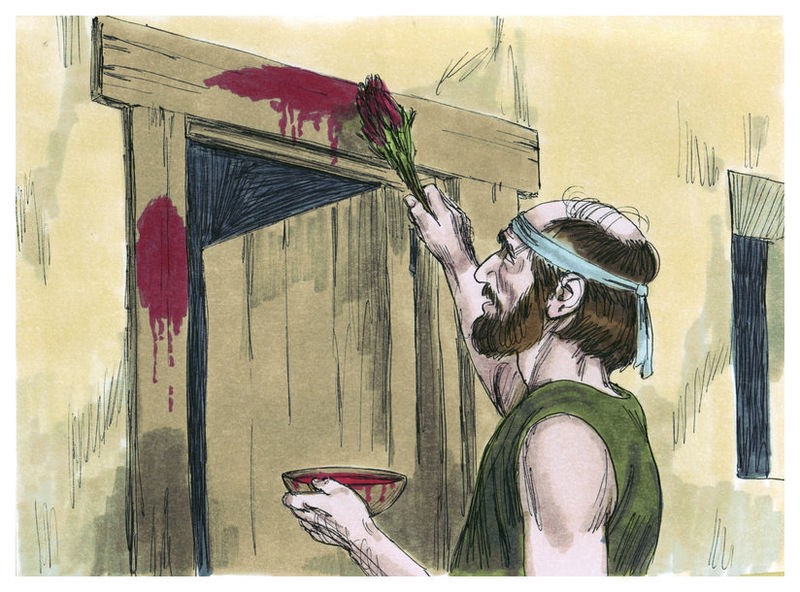
Judas, in betraying Christ, did not just cause Christ to be arrested. He removed Himself from the LORD’s covering. In Exodus 12, we read of the instructions given to the Israelites concerning the Passover. The door posts were to be painted with the blood of the sacrificed lamb. This blood became a sign to the angel of death, who passed over the land of Egypt that night, that the household with the sign of blood was covered and was part of the covenant.
Judas, in his betrayal, became like an Egyptian who did not heed to the warning. His betrayal led him from under the covering of the LORD. This covering was not just a protective one; it was a covenant one! This then helped me to understand something about what Christ was showing his disciples (and therefore us the readers) even when conducting this the first ever communion service:
“Partaking in His communion is about the heart, not the action of eating!
None of the disciples were perfect! Almost all of them ran for their lives, abandoning Him that night. Simon Peter even denied Him three times that night! None were perfect, but Christ knew their hearts. They were all still under His covering. He knew that, despite their pitfalls, they would rise up from such a mire, go forth, and accomplish the task that He would give them in absolute obedience. Jesus knew that they would not be overcome by the wicked one. It leads me back to something Christ would have said to Peter:
31 And the Lord said, Simon, Simon, behold, Satan hath desired to have you, that he may sift you as wheat: 32 But I have prayed for thee, that thy faith fail not: and when thou art converted, strengthen thy brethren. 33 And he said unto him, Lord, I am ready to go with thee, both into prison, and to death. 34 And he said, I tell thee, Peter, the cock shall not crow this day, before that thou shalt thrice deny that thou knowest me.
Luke 22:31-34 (KJV)
Satan did desire to sift Peter out. Jesus also did say that Peter would deny Him three times. However, He also stated that He prayed for Peter, so that Peter’s faith would not fail. He also encouraged Peter to strengthen the others when he (Peter) is fully converted. It was all an encouragement to Peter and to the others. They were covered, they were protected. Judas, on the other hand, opened up himself to the enemy’s sifting, thereby missing out on so much. Though he ate with them, he was only a food-consumer and not a covenant-partaker. Also, though he was one of the original 12 disciples, he was not going to be part of the movement that was going to establish the Church.
Lesson #3: Never respond with evil but always with good

Jesus knew that He was going to be betrayed. He knew that His betrayer was right there in His presence. Nevertheless, He responded by doing good, not evil. He responded with good because:
- Since He is God, He is the definition of Love (1 John 4:7-8). He therefore loved all the disciples, including Judas who betrayed Him.
- He was focused on His task of redeeming Humanity. Therefore, such an act of betrayal could not get in the way of the overall mission.
- The Holy Communion needed to be established for the generations of Saints to come.
This reminds me of King David being placed by the LORD at a table prepared for him in the presence of his enemies (Psalm 23). It was both a sign of mercy, of love, and even of victory. If Jesus were to act sinfully to such a betrayal by abandoning the mission, it would have meant that many souls would have been lost to eternal damnation without any hope. It also would have challenged His authenticity as the Messiah and as God Himself. But responding in sin is impossible for Jesus to do. He knows no sin. Therefore, He can only respond in total love to Judas. It reminds us of how we should respond in situations around us; with love and good, never with evil.
Conclusion
There are many other lessons that we can learn from Judas’ scenario. Primarily, we should appreciate God’s grace and mercy that is shown towards us. We must also appreciate the fact that, just like what He encouraged Peter with, He is interceding for us continually. This scenario must also encourage us to walk circumspectly. Even when we are chosen by God, it is not a sign that we are not prone to mistakes. Instead, His choosing is also His assurance of keeping. So don’t escape from His keeping and His covenant promises.
 Beacon Of Flavor