

We can all agree that the year 2020 will be one that will always be remembered. On a global scale, mostly negatively; on an individual level, it would vary. Besides the pandemic and the chaos, one intriguing aspect of this year is the frequency of General/Political Elections being held, especially within the United States and the Caribbean Islands. This year, St. Kitts and Nevis, Guyana, Trinidad and Tobago, Jamaica, and St. Vincent and the Grenadines would have held or are going to hold general elections. Most famous of all is the United States’ Presidential Election which is slated to be held in November.

Politics has always been a topic of contention, especially within the Church setting. The Governmental systems are usually seen as the reflection of the societal state of well-being, and are frequently associated with “corruption”, “divide”, and “compromise”. On the other hand the contention is further escalated when considering the importance of a Government in providing resources, employment, and aid, as well as implementing policy, on a national level. Governments have an effect on how we do business, our health, education, relations with other countries, and even our freedom of expression. Therefore, one has to consider the importance of General/Political Elections and the democratic process of forming a new, or returning, Government.
This is where we, once again, mention “the Church”. The argument of “Church and State” has been an ever-occurring one. Should the Church and the State (the Government) be associated with each other or should they be separated from any association? Many even question if Christians should partake in politics or refrain from voting due to certain “apparent corruptions” and abnormalities that do not coincide with the teachings of Jesus Christ.
This article, however, does not seek to answer those questions. Instead, it seeks to address one that is actually of greater importance. The question we should be asking ourselves, as Christians, is “what should our response be to a season of elections?”.
#1: We are, firstly, Kingdom Citizens
“But our citizenship is in heaven, and from it we await a Savior, the Lord Jesus Christ,”
Philippians 3:20
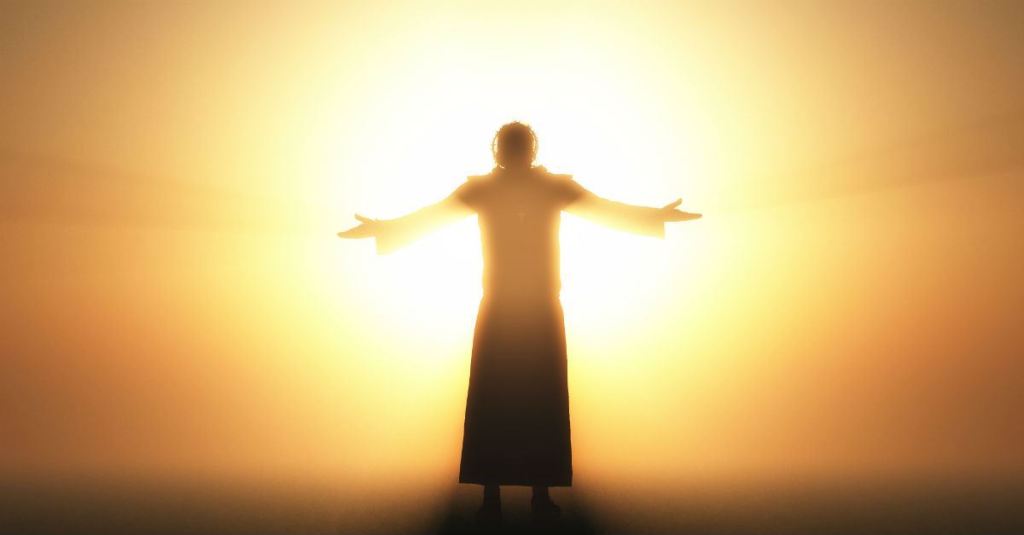
This statement is not a matter of disassociating ourselves from society; it’s a matter of priority in perspective and in living. The Apostle Paul lived, ministered and traveled within a politically tumultuous time and region. Although the Roman Empire was the governing authority of much of the world then, there were other nations, tribes and groups who all had different ideologies to those of the Romans. Within Rome, itself, there were many contentions. There was always an Emperor who felt that he was divine, a Senate that seemingly had an on-and-off impact on the functions within the Empire, and some suspicious character who turns out to be seeking the Emperor’s life, carrying out unsuccessful, or sometimes successful, assassination attempts.
Paul reminds us, in Philippians 3:20, that we are Citizens of Heaven; we are citizens of the Kingdom of God. Such a citizenship was given to us upon our acceptance of the sacrifice of Jesus Christ, our confession of our sins, our belief that He is the only begotten and risen Son of the Living God, and our loyalty to Him and to His cause. We belong to a Kingdom that is eternal, principled, and governed by the Almighty God Himself. It transcends Earth, Time and Space and impacts all forms of reality. Paul is reminding us that our allegiance must firstly be to the Kingdom of God.
There is a reason why our allegiance should firstly be to the Kingdom of God.
“And Jesus came and said to them, “All authority in heaven and on earth has been given to me.“
Matthew 28:18
Jesus Christ possesses all authority in every realm of reality. It is because of this authority that He can then tell us, in verse 19, to “Go into all the world and preach the Gospel to every creature“. The Gospel of the Kingdom is radical, revealing, and transforming. It does not adhere to the governing systems of the world as it is not tarnished in any way by sin’s grasp. It is a Kingdom not made “by the hands of men” (2 Corinthians 5:1), “not of this world” (John 18:36), and belongs to God Almighty Himself (Matthew 6:10). A Kingdom-minded person always keeps this in mind and at heart, living a life based on such fundamental facts.
In everything that we do, we must operate based on the principles of the Kingdom of God. God’s triune nature (Father, Son, and Holy Spirit), His attributes, His Spirit’s operations and expression, and His Kingdom’s reach and impact must be understood and lived according to. God desires for His Kingdom to come and for His will to be done (Matthew 6:10). He desires that all come to the knowledge and acceptance of His Son’s sacrifice – of His sacrifice (John 3:16-17). He desires that His Holy Spirit’s operation be seen within the life of an individual through the expression of the Spirit’s Fruit (Galatians 5:22).
Simply put, in all our interactions, in everything we say, in everything we do, and surely in how we approach societal topics, including elections and politics, our approach must be a Kingdom one. We should not take a stance with a political party on a particular issue because we support that party, yet knowing deep within our hearts that such a stance would go against God’s Kingdom and His Righteousness. We must know that God’s Kingdom supersedes all other kingdoms, systems, and governments. Therefore, our priority in obedience, allegiance, and living must be to Him, His Kingdom, and His Righteousness (Matthew 6:33). Such a Kingdom stance would (not might) offend people. This is where you would have to take a stance, similar to Peter’s and the other Apostle’s, which is:
“But Peter and the apostles answered, “We must obey God rather than men.“
Acts 5:29
#2: Our Duty to Governments and Leaders
“First of all, then, I urge that supplications, prayers, intercessions, and thanksgivings be made for all people, for kings and all who are in high positions, that we may lead a peaceful and quiet life, godly and dignified in every way.”
1 Timothy 2:1-2
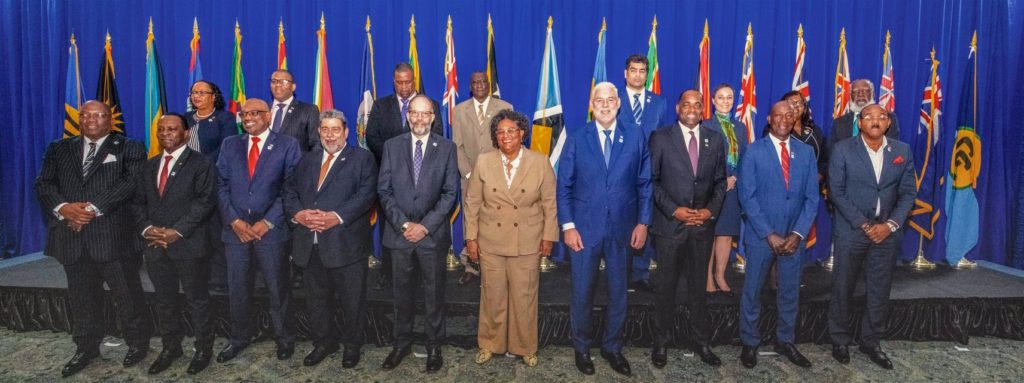
There are many believers who adopt their “Kingdom citizenship” out of it’s correct context and meaning. They automatically assume that it involves ignoring the plights of society, isolating themselves from others, disrespecting leaders, and being silent in the midst of societal ills and issues.
Paul encourages Timothy to be in constant prayer and intercession for (not against), kings and other leaders who are in varying positions of authority. This is so that we as believers can live a peaceful life while being godly and dignified in every way (1 Timothy 2:2).
Many times, Christians find themselves engaging in political discourse that can become “unseemly”. Even if we may not agree with a governmental figure or political candidate, we are called to pray. This does not mean that meaningful criticisms cannot be made. Poor healthcare, low levels of unemployment, and violence all must be addressed and dealt with. For us as Kingdom Citizens however, our duty is not arguing, cursing, or issuing verbal abusive statements about it. We must approach it in prayer and also make an impact (see our third and last point).
As Kingdom citizens we must look at people not through political eyes but through God’s eyes. We must see people as souls and not as enemies or dispensable items. A politician once would have been a young child, teenager and young adult, who had certain dreams and aspirations, and may have made either good or bad decisions throughout life. Some governmental and political figures would have done evil deeds and would have carried out great atrocities, which would all rightfully deserve justice.
However, even in such cases, our approach must be a prayerful one. We must see everyone as a soul that needs to be impacted by the Love of God. On a greater level, we must see our societies as being candidates of God’s impact. The expression of God’s Kingdom within our lives, within the lives of others, and within our Government systems should be a prayerful priority.
For an election season, our approach should also not be praying deliberately for a particular party or person to win. You would naturally have your desired candidate/s and would have your political bias, or you may not. However, a believer’s approach to any election season should be the “Matthew 6:10” approach – praying for God’s Kingdom to come and for His will to be done.
Such a step can seem difficult at times, especially when candidates may be “extremely polarizing”. But it is important to know that God’s viewpoint encompasses the cosmos and beyond. He already sees how everything will work out based on every step taken and every move made. Additionally, His will will always work out for the good of those who love Him and who are called according to His purpose (Romans 8:28).
Always remember, as well, that praying for leaders does not just include praying for the Prime Minister or President. It also includes Cabinet, Parliament, the Senate, House of Representatives, the Opposition, and other political parties and institutions. We must also pray for the Judicial System, as well as for those in authority in Health, Education, Finances, Security, Infrastructural development, Agriculture, Transport, Social Welfare, Sports, and the like.
Also, it is important to remember this fact:
“He changes times and seasons; he removes kings and sets up kings; he gives wisdom to the wise and knowledge to those who have understanding;”
Daniel 2:21
Changes in government, changing of seasons, revelation, wisdom; all are determined and/or allowed ultimately by God Himself. There may be conspiracy theories about secret organizations that control the world’s governments and finances, or there may be the occasional occurrence of election fraud. However, God’s will and purpose will always supersede any unholy, unethical, inhumane, or fraudulent act. It may not seem that way to us at times, but it is imperative that we trust His will and His sovereignty.
#3: Don’t Depend. Instead, Take Action.
“And to aspire to live quietly, and to mind your own affairs, and to work with your hands, as we instructed you, so that you may walk properly before outsiders and be dependent on no one.”
1 Thessalonians 4:11-12

Paul, once again, encourages us to be industrious and hard-working. It is part of the Kingdom’s cause that we not be dependent but, rather, impact. This does not mean that we would not benefit from certain provisions from the Government; water supply, electricity, healthcare, education, etc.
However, an attitude of dependence is not seemly for Kingdom Citizens who have the Holy Spirit dwelling inside of them. There needs to be a push among Believers to meet certain needs within society. Churches should not be encouraged to just acquire funds through tithes and offerings. We as the Church must impact by building homes, hospitals, clinics, and schools. We must also offer counselling, relief, and help to those in need. That would show forth the Kingdom impact.
Believers should also be encouraged to embrace entrepreneurship. It does not make sense that we live lives of being super spiritual people, wrapped-up in mysticism, yet are not making any impact and are not industrious in our ways. Open businesses, work on ideas, and allow God to use us to start initiatives that can provide help and employment.
In an election season, our approach should not be browsing through manifestos and panicking if things do not work out as they were portrayed to. Political systems and systems of Government are still flawed so everything would not be perfect. Praying for an imperfect system is our approach; depending solely on such a system should not be our response. Therefore, in this election season, consider what we as a Church can do for the glory of God and for the betterment of society, instead of depending solely on any man or woman in the political arena to institute any change and/or reform. Let us learn to work diligently for the Kingdom’s cause.
Conclusion
This article is not a call to not have a political opinion or to refrain from voting. Voting is a constitutional and democratic right, so exercise it. However, when exercising such a right, consider your position as a Kingdom citizen. Even if you may be a card-carrying party member, or your family history is defined by an association to a particular party, your allegiance must ultimately be to the Kingdom of God. Also, always remember to pray for your leaders, even those whom you may not support politically, and for society in general. Finally, make an impact, be industrious, and do not adopt an attitude of dependence; depend only on God Himself, within whom there is no variance or shadow of turning (James 1:17).
So, before, during, and after your respective election seasons, remember, above all else, that you are a Citizen of the Kingdom. Act accordingly for God’s glory.
 Beacon Of Flavor
This Article should provoke one to action, # 3 is especially impacting ~ Kingdom People should always be proactive.
[…] The Believer’s Response in a Season of General Elections […]