
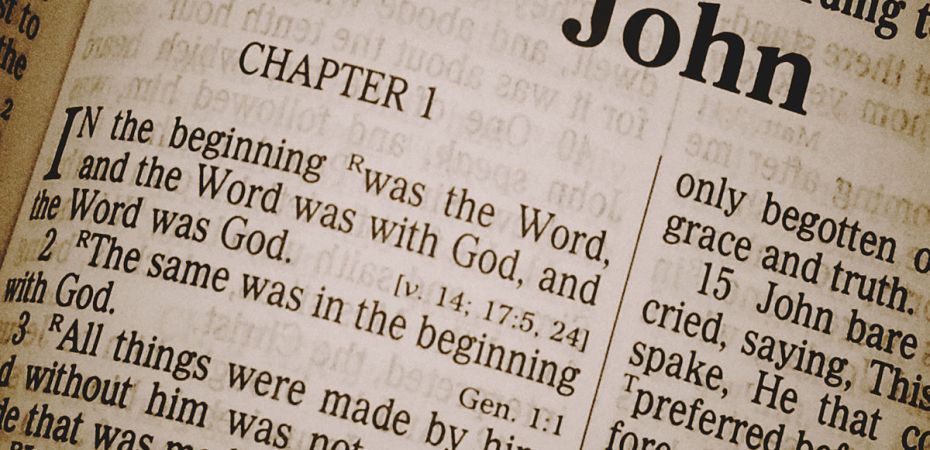
So last time we began our study of the Gospel of John Chapter one (1). There, we focused on a study of verses 1 to 8. In case you may have not gotten to read it, check it out by clicking the following link:
In this article (Part 2) we will focus on doing a study of verses 9 to 18.
Verses 9-11
“(9) That was the true Light, which lighteth every man that cometh into the world. (10) He was in the world, and the world was made by Him, and the world knew Him not. (11) He came unto His own, and his own received Him not.”
St. John 1:9-11 (KJV)
As we discussed in Part 1, Christ Jesus Himself was full of life, specifically “Zoe” life. “Zoe” is the Greek word that refers to “eternal, uncreated life” (we discussed this in Part 1). This life from Christ Jesus Himself also acted as “Light” to all humanity and this Light, interestingly, is described as being “the true Light“. The Greek word that is used to represent the word “true” in this context is “alethinon” which means “true“, “real“, “genuine” or, literally, “made of truth“. “Alethinon” is the adjective form of the noun “Aletheia” which means “the Truth“.
This light that John spoke about was not just any light, and it wasn’t just simply “true light”. He specifically describes this light as “being made from” or organically “coming from” Truth itself. This would support Jesus identifying Truth as not just a condition but as having a personality, when He said:
“..I am the way, the truth and the life..”
St. John 14:6 (KJV)
Not surprisingly, in St. John 14:6, the Greek word used to describe the truth is “Aletheia“. “Aletheia” speaks not of “a truth” but refers to “THE TRUTH“, showing that there is an absolute nature to Truth. Jesus also shows, by issuing the title of “Aletheia” (the Truth) to Himself, that Truth has a personality and that personality is His. He defines Truth because He is Truth. That’s why John shows Jesus as being “the True Light“, in that Light comes from Him, literally issuing from absolute Truth itself. Such Truth gives clarity, vision and light.
The light that issues from such Truth is so powerful and having such great impact that it is given the literal Greek term for light, “phos“, which means “light” or “daylight“. This is a peculiar move by John as he uses the noun “phos” and does not use the verb “phainó” which means “to bring to light” or “to cause to appear“. John deliberately uses the noun form of light, instead of the verb, to show that Jesus didn’t just bring light; He was and is Light, the True Light. This shows that John’s aim was not just to show what Christ did. His aim was really to show who Christ is.
This True Light “lighteth every man that cometh into the world“, which shows both (1) the relationship that Christ wanted to have with all humanity, and (2) the continuation of His work of illumination even beyond the point in history in which He came to Earth in Human form. Such a relationship can be seen in the use of the Greek word “phōtizei” for “lighteth” which means “to shine” or “to give light“. If John had used “phainó” here, then it meant that Jesus was simply only bringing a realisation of a truth to mankind. It would have shown Him just simply helping them to understand something, which is what the prophets and the apostles did. Christ, however, literally shines and gives light, or “phōtizei” as Light, Truth and Life are His very nature. Him shining on mankind shows His willingness to cause all men to engage in, experience and receive Life, Truth and Light of an eternal and perfect nature.
Verses 10 and 11 then present a harsh truth to us. Jesus Christ, the creator Himself, came to the very Earth that He created, and was not received by us to a large extent. It shows how amazing it was that the Creator would visit creation, and yet shows us how sad it is that creation would not recognise nor accept the Creator. This means of (1) the immense humility that Jesus came to Earth in, and (2) the lack of discernment among humankind towards the divine nature of God Himself. It makes us wonder whether or not we would have accepted or rejected Jesus Christ if we were living in those days.
Verses 12-14
“(12) But as many as received Him, to them gave He power to become the sons of God, even to them that believe on His name: (13) Which were born, not of blood, nor of the will of the flesh, nor of the will of man, but of God. (14) And the Word was made flesh, and dwelt among us, (and we beheld His glory, the glory as of the only begotten of the Father,) full of grace and truth.”
St. John 1:12-14 (KJV)
Verses 12 to 14 can be described as “foundational scriptures” in Christian theology. They reveal fundamental facts which include.
- God availing Himself to be received by us.
- God transforming us and giving us a new identity.
- God taking on our human form and living among us.
- God showing forth His glory and fullness of Grace and Truth while living among us.
“But as many as received Him” shows the open invitation to eternal Life, Truth and Life that Christ Jesus offers. It supports His declaration to Nicodemus when He said:
“For God so loved the world, that He gave His only begotten Son, that whosoever believeth in Him should not perish, but have everlasting life.”
St. John 3:16 (KJV)
Whosoever receives Christ Jesus is a person who believes in Christ Jesus. Receiving and believing in Him allows us to receive from God an essential component in Godly living; power.
The Greek word used to describe power in this context is the word “Exousian” which means “the power to act” or “the authority“. It is actually derived from the verb “Exesti” which means “it is permitted” or “lawful“. This adds a whole new dynamic to our understanding of “power” which God gives to us, and “power” in general. Power and Authority are inseparable. When God gives us “power” to become His sons, He is giving us “the authority” and “legal power to act” in such a capacity. This is why the scripture says:
“And if children, then heirs; heirs of God, and joint-heirs with Christ; if so be that we suffer with Him, that we may be also glorified together.”
Romans 8:17 (KJV)
As Christ Jesus is the manifest “Son of God”, so are we given the right and authority to operate as “sons of God”. We are seen as “heirs of God” being inheritors of His promises, and “joint heirs with Christ Jesus”. Romans 8:17 does highlight, however, that this title of “heir” is participatory and not “replacing” or “being equal” to Christ. Jesus came to be an example to us of how to live even while dwelling in fleshy, mortal cases (our bodies). He carried the title “Son of God” as a visual of relationship, a relationship that He hoped everyone can achieve with God being their Father.
We join Christ, as heirs, in partaking in (1) His sufferings, and (2) His glorification. It is essential for us to understand that belonging to Him, being a “son”, and a follower means suffering as He did and enduring what He endured, except the cross (which we could not endure on our own). Operating as a “son” is a right with authority, as it speaks of (1) a renewed heart and mind, (2) a redeemed soul, (3) a vessel of the Holy Spirit, and (4) having authority in the seen and unseen realms.
Such “Exousian” power can then lead to what is known as “Dynameōs” power which means “force” or “miraculous power“. This was used by the Apostle Paul in 1 Corinthians 2:4, where he said:
“and my message and my preaching were not in persuasive words of wisdom, but in demonstration of the Spirit and of power,”
1 Corinthians 2:4 (KJV)
The authority that God gives to us to become sons can allow for the manifestation of the Holy Spirit and the miraculous power of God. This can be through the preaching and teaching of the Word of God, as well as signs and wonders. As we have received “Exousian” power we would then develop, in the Holy Spirit, to exhibiting “Dynameōs” power. This would not and cannot be done on or of our own effort (we were born not of blood, nor of the will of the flesh, or the will of man). It can only be done under the guidance and complete control of the Holy Spirit in and through us.
Verse 14 then presents a beautiful statement of (1) Christ’s determination to have a relationship with us, and (2) the revelation that all “sons of God” receive by the Holy Spirit concerning Jesus Christ. He came in human flesh, being the Word of God still (see Part 1 ), while taking on the frailty of humanity, to become acquainted with our situations, as seen in Hebrews 4:15 which says:
“For we have not an High Priest which cannot be touched with the feeling of our infirmities; but was in all points tempted like as we are, yet without sin.”
Hebrews 4:15 (KJV)
Verse 14 then goes on to describe Him as being “full of grace and truth”. The “truth” affirms John’s explanation thus far in the chapter, showing Christ as the source of Life and that Life bringing Light and Truth. Him being full of Grace adds another dynamic to His arrival, especial in the Jewish setting. In a society where the Law prevailed and defiance of its statutes meant death, Jesus Christ offered something that didn’t Mosaic or lawful; Grace. The Greek word used here for Grace is “Charitos” which means “Kindness“. He was filled with life-changing Truth and barrier-shattering Grace that, when combined, created the perfect remedy for a sin-sick humanity; truth, salvation and hope.
Verses 15-18
(15) John bare witness of Him, and cried, saying, This was He of whom I spake, He that cometh after me is preferred before me: for He was before me. (16) And of His fullness have all we received, and grace for grace. (17) For the law was given by Moses, but grace and truth came by Jesus Christ. (18) No man hath seen God at any time, the only begotten Son, which is in the bosom of the Father, He hath declared Him.
St. John 1:15-18 (KJV)
John the Baptist gives a further testimony of Jesus Christ, alerting to all (by evidence of the scripture saying “and cried”) that Jesus was the one who he was speaking about. We saw in Part 1 that John was declaring the coming of the Messiah. He also recognised that Jesus Christ was that promised Messiah and that He was not just a mere man; He was, in fact, divine. He describes Jesus as “coming after him” (alluding to the prophecy given in Malachi 4:5-6) as well as being “preferred before me” and Him being “before me” (alluding to Jesus’ divinity).
The author then describes us as having received Jesus’ “fullness” as well “grace for grace”. The Greek word used to describe fullness in this context is the word “Plērōmatos” which means “fullness” or “a filling up“. It is derived from the word “Pléroó” which means “to make full” or “to complete“. Jesus Christ brought completion with Him when He brought the fullness of Grace and Truth that was in Him. Mankind needed revelation (Truth) and forgiveness (Grace), which would lead to our Redemption. He allowed us to receive of His fullness, that fullness being His fullness of Truth, Life, Light and Grace, all of which John showed us earlier in the chapter that He (Jesus) was filled with. He came not just to be filled with such fullness and to show us how filled He was, but He became to cause us to be partakers of such fullness;His fullness. We needed and still need to partake in such a fullness, as it brings our very salvation, continual transformation and hope of glorification.
God gave the Law to Moses. However, Christ had to be revealed as the Law by itself could not save men. It does not mean that the Law is absolute. Jesus Himself expressly showed this when He said:
“Think not that I am come to destroy the law, or the prophets: I am not come to destroy, but to fulfil.”
Matthew 5:17 (KJV)
Only someone who contains true fullness can bring true fulfilment of a requirement as the Law itself. Even when the Law was revealed, it was seen at the revelation of Jesus Christ, that Grace was needed to help men in fulfilling the Law. The thing is, it was impossible for Grace to be manifested without Jesus Christ’s arrival, as He was the only one filled with Grace as well as Truth.
This also shows us the significance of what John said in verse 18, with no man ever truly seeing the Father at any point in time, until the revelation of Jesus Christ, when God revealed Himself in the most intimate way ever to human beings; as a human being Himself. Jesus Christ was the first one to truly declare God in the deepest and most personalised way ever, as He was and is one with the Father (in the bosom of). This is shown in the original Greek where the Greek words “monogenēs” (only-born) and “Theos” (Divine God) are used together in a grammatical form that literally translates “the only-born who is Himself God”. The word “Kolpon” is also used to represent “bosom”, with “kolpon” literally meaning “side”.
John’s claim is continually affirmed in the literature where Jesus Christ is God Himself, the very Word (logos) of God that was with God and was God in and before the very beginning. We have also seen that He is one with God and that He is filled with Life, Light, Truth and Grace. Such Light was needed for the illumination in the darkness, Life for sustenance and receiving eternal life, Truth for the revealing, and Grace for the fulfilling of the Law; all for the sake of mankind and all provided by and through Jesus Christ.
TO BE CONTINUED
Sources of Assistance
 Beacon Of Flavor
[…] You can read “Word Study: The Gospel of John Chapter 1 (Part 2)” here. […]
[…] https://thegospelsteward.com/2020/04/26/word-study-exploring-the-gospel-of-john-chapter-1-part-2/ […]
[…] You can read “Word Study: The Gospel of John Chapter 1 (Part 2)” here. […]
[…] Word Study: Exploring the Gospel of John Chapter 1 (Part 2) […]
[…] Word Study: Exploring the Gospel of John Chapter 1 (Part 2) […]