

The Holy Bible is an amazing book. It is also the standard and defining document that guides the Christian faith. Throughout history it has been read, loved, hated, despised, and even attacked. Nevertheless, it has stood the test of time.
As phenomenal as it is, when reading it for the first time, you will realise that some assistance in understanding it would be greatly appreciated. Here is a list of ten (10) things to consider when studying the Bible.
#1 The Bible is a Dynamic, Multi-faceted book

The Holy Bible is not just a book of lists of things to do and things not to do. It is a dynamic and multi-faceted book. It covers topics such as History, Love, War, Family, Choices, Demise, Trials, and Triumph. There are books, such as Genesis and Judges, that are primarily historical recordings. The Psalms and Song of Solomon, on the other hand, are more poetic in nature. Exodus, 1 and 2 Samuel, 1 and 2 Kings, and the Acts of the Apostles are books that would excite any action and adventure seeker, while Leviticus, Numbers and Deuteronomy are books that give the laws of the nation of Israel in detail. The four books of the Gospel, Matthew, Mark, Luke, and John, blend several topics together, with their aim being to highlight the life, ministry, death, burial and resurrection of Jesus Christ. The Bible goes even further to give imagery of the future, which is done primarily in the books of Daniel, Ezekiel, and the Revelation of Jesus Christ.
#2 The Bible is One Cohesive Story
As a young believer, though I loved reading the Bible, it was difficult at times to understand. I always saw the events and accounts as being separate, some being unrelated to each other but mentioned still just to teach us a lesson or two. As I grew in my relationship with Christ I realised that they were interconnected. The prophecies given by God through men such as Abraham, Moses, King David, Isaiah, Jeremiah, Ezekiel, Daniel and Zechariah (in the Old Testament) echo in fulfilment at the coming of Jesus Christ (in the New Testament). The book of Ruth ends with an explanation showing that Ruth and Boaz had a son named Obed, who had a son named Jesse, who then had a son named David. Both Ruth and 1 Samuel are connected, highlighting Ruth as being David’s great-grandmother. Peter in the book of Acts draws reference to Joel 2 and the fulfilment of prophecy on the day of Pentecost. Throughout the entire book, though there are many events and writings occurring, they are all interconnected, leading to a central point which we will highlight in point #10.
#3 Know that the Bible is the inspired Word of God
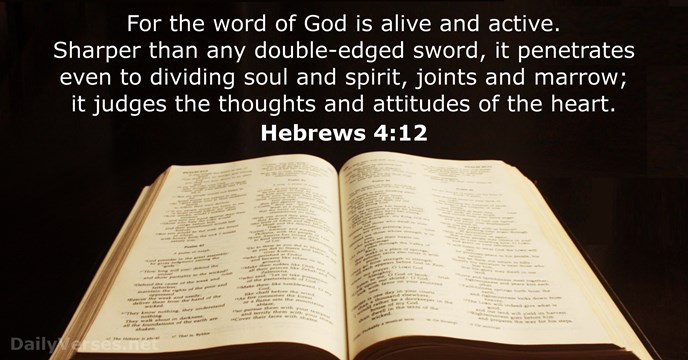
This has been the major point of argument for many over the years. However, there are various pieces of evidence which would show that the Holy Bible is indeed the Word of God. Such pieces of evidence include the following:
- The Bible is scientifically accurate (Job 26:7; Isaiah 40:22)
- It is historically accurate (Daniel 5:29)
- It reads as one story through 66 books, written over 1,600 years by 40 authors from/in 13 different countries.
- It gives accurate prophecies (300 which were fulfilled concerning Jesus Christ alone)
- Despite difficulties, it has lasted throughout the ages (1 Peter 1:25)
- Its original manuscripts (there are 5,000 ancient Greek manuscripts of the New Testament dating as far back as 30 years after the originals were written)
- The person of Jesus Christ (Jesus Christ is mentioned in all of the world’s major faiths and his life, ministry, crucifixion and even resurrection can be supported with historical evidence.
Such cohesion, unity, longevity and significance can only be the work of God. Plus, the Holy Spirit dwelling inside of a believer would help to affirm that we are indeed reading the inspired Word of God.
#4 Understand the Times and Settings of the Bible

The Bible is an ancient book. Therefore the setting and the times in general would be of an ancient nature, with customs and habits not acquainted with our modern times. It is therefore important to consider this when seeing, for example, how certain punishments were carried out (by stoning) and how men were married to multiple women while also having concubines (Abraham, David, Solomon, etc). These are not facts that can be used to doubt the Bible’s authenticity, neither are any of them evidence towards God being evil or double standard in any of His ways. The Bible simply highlights the situations back in those days, with God showing a better way out of such a state. For example, though Abraham, David and Solomon had multiple wives and concubines, such a state brought them much difficulty even, in Solomon’s case, causing them to stray from God. That’s why God then instructs in 1 Timothy 3:2 that a Bishop (leader in the Church) should be the “husband of one wife”. The Bible was also set primarily in the Middle East and Mediterranean worlds. Therefore, it would be highly unfair and careless to judge it in terms of it not complying to Western culture. Just some food for thought.
#5 Know the difference between the Old and New Testaments
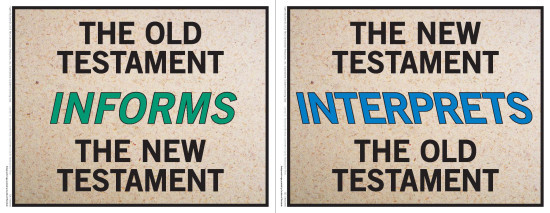
It is frequently argued that many Christians segment the Bible, adhering to the Old Testament and forsaking the New or (more popularly) the other way around. The word “Testament” comes from the Greek word “diathéké” (pronounced ‘dee-ath-ay’-kay‘) which means “Covenant” or “Will“. The Old Testament represents the origin of all creation, mankind and sin. As a result there needed to be an atonement for such sins, hence the introduction of animal sacrifices. There were also strict guidelines as to keeping oneself holy in God’s sight, guidelines which were seemingly impossible to keep but had to be kept. The Old Testament presents how much of a dire state mankind was in because of the fall. It had to present the reality of strict laws, failures, mishaps, and tragedy as the ultimate precursor to the work that Christ was going to do on the cross. As the attached image above rightfully states; “The Old Testament informs the New Testament and the New Testament interprets the Old Testament“.
#6 Understand the Themes of the Bible
Although this is not an English Language class you cannot overlook the themes of the Bible. There are key themes that the Bible deals with, such as the Love of God, His Triune nature (the Holy Trinity), His Creativity, His Holiness, His Majesty and Sovereignty, and His Justice. All of these themes are, naturally, connected to the Love of God, with God actually being the definition of love (1 John 4:7-8). However, if we are to give the Holy Bible an overarching theme that encompasses all themes, it would be “the manifestation of the glory of God“. You see, God’s Love, Mercy, Creativity and Justice are all, collectively, the manifestations of His glory. That is why the scripture says:
And the Word was made flesh, and dwelt among us, (and we beheld his glory, the glory as of the only begotten of the Father,) full of grace and truth.
St. John 1:14 (KJV)
#7 Understand the Characters of the Bible
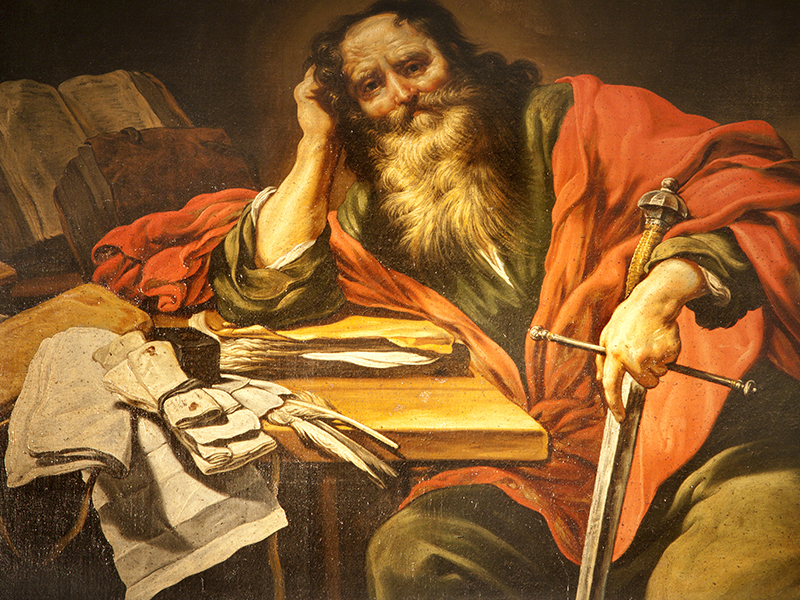
One of the key factors that makes the Bible intriguing are the Characters. You would think that, for a book with the word “Holy” attached to it, the characters would properly reflect such a title. However, it is the opposite. The characters of the Bible are some of, if not the most, renowned individuals to ever live on planet Earth. Yet, they sinned and had many shortcomings. Some even ended life on a very bad note. We think about people such as Abraham, who was the father of many nations, yet gave his wife up TWICE just to save himself. God used Noah to build the Ark and save the lives of his family and the animals of the Earth, yet Noah got drunk to the point of carrying himself in nakedness. Gideon was extremely timid with low self-esteem, David was a man after God’s heart yet killed a man just to get the man’s wife, Samuel was a mighty prophet of God yet he raised ungodly children, Hezekiah loved God yet his son became the most evil king Israel ever saw, Peter was an Apostle but cursed and had a low temperament, and Lazarus was dead.
Besides Jesus Christ, every Biblical character had their individual short comings. But that is what is so amazing about the Bible. It’s aim isn’t to present perfect individuals, it’s aim is to show how the perfect God loves and uses imperfect individuals. It then would help us to understand that we are truly not removed from the grace, mercy and love of God. Just as he used them He can and will use us, only if we let Him, as many of the Biblical characters did.
#8 There are different Techniques in Studying the Bible
If you do a Google search as to how to study the Bible you will see a plethora of information. One of the key things to grasp in studying the Bible are the themes of the Bible, as was discussed before. Each book has an overarching theme. Then you must consider the Bible being one cohesive story, consider the settings of the Biblical accounts, and consider the characters. Then you can develop a strategy or technique in studying the Bible.
Initially you can start by looking at three ways in which you can study the Bible:
- The Synthetic method (studying a specific book of the Bible)
- The Topical method (studying a specific topic dealt with in the Bible)
- The Biographical method (studying a specific character in the Bible)
As you grow and develop as a Believer you will encounter various other techniques that would help you to study the Word of God and explore its riches. We will discuss more of these techniques in other articles to come.
#9 Understand how the Bible applies to Us Today

Although the Bible is ancient and the context of scripture, at times, applicable only to the specified time period, the Bible is applicable to us today. The principles of wisdom and the call to repentance are applied to all mankind, where we are encouraged to follow them. As John 3:16 rightfully says “for God so loved the world“. All of humankind are called to repentance, a call that still exists to this day. This is because, just as the characters of the Bible, we were also born in sin and shaped in iniquity (Psalm 51:5). Nevertheless thanks be to a certain someone who died for our sins. Who is that certain “someone” you may ask? Let’s see point #10.
#10 The Bible centres on and surrounds Jesus Christ

The single greatest person to ever live, walk on, and impact life on planet Earth is God the Son, manifested in human flesh, who was called Jesus the Christ. The Bible just does not centre on Jesus because He was a great teacher or great miracle worker. It centres on Him because He is God Himself. This is expressly supported in John 1, with Jesus not only coming to declare the Word of God, but He Himself actually being the very Word of God. Jesus is the manifestation of the prophecy given in Genesis 3:15 where the seed of the woman would crush the serpent’s head and His heel, in return, would be bruised. This signified that Christ was going to come to inflict judgement on the serpent and sin. Many prophecies were given after that concerning His coming and what He will do when He comes. Jesus Christ is the connection between the Old and New Testament. He is the ultimate person, the ultimate plan, the very reason the Word of God was given to men to live by and to hope towards. Therefore, when studying the Bible, start with knowing that Jesus Christ is the centre of it all.
Thanks for checking out our list of 10 things to consider when studying the Bible. We pray that you will be encouraged to continue, or start, studying the Word of God. There are many riches to explore!
 Beacon Of Flavor
This was a wonderful read. So informative, thanks Chad!
I am really thrilled with this ten-point piece. It’s tremendous for new converts , for mellenials and for anyone who wants to gain more enlightenment from this ancient but ever-relevant Heavenly, Treasured Text.
Excellent work, easy reading, applicable for all age groups and levels of maturity.
[…] 10 Things to Consider when Studying the Bible […]