
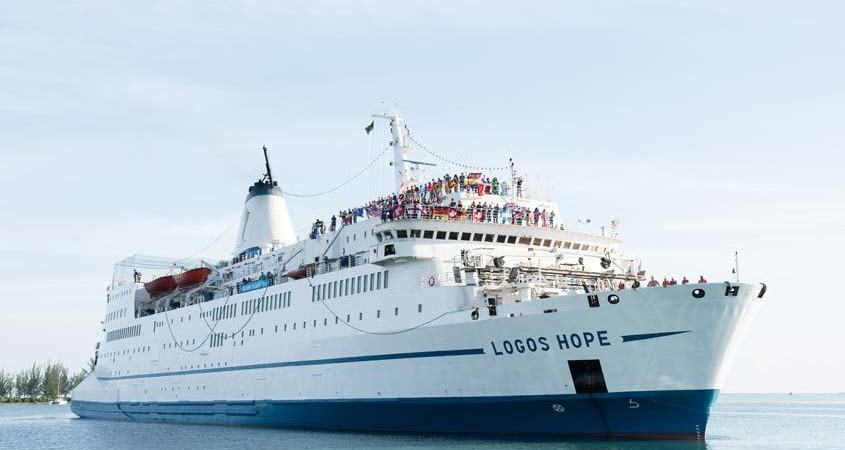
This article was written to commemorate 40 years of G.B.A. ships’ missionary outreach initiatives to the islands of the Caribbean (1979 – 2019) and 10 years of the M.V. Logos Hope sailing on the world’s oceans. Their ministry and outreach was done, faithfully, through their ships; the M.V. Logos, the M.V. Doulos Phos, the M.V. Logos II, and the M.V. Logos Hope.
The announcement is made and anticipation builds. Both adults and children get excited and expectant, even nostalgic. The key dates and overall duration are noted and announced in churches, schools, business places, and throughout the nation. It sounds like this is referring to the arrival of Haley’s Comet or a Head of State or Diplomat of some sort. Actually, it is the arrival of a ship, and not just any ship. It is the arrival of a G.B.A. Ship, or what is more colloquially and affectionately described with the statement “Logos (is) coming”.

“G.B.A Ships” (colloquially known as the Logos Ships) is a German-based charity that operates “floating bookshops” both as a ministry initiative and as a humanitarian outreach mechanism. “G.B.A.” stands for “Gute Bücher für Alle” (German) or “Good Books for All” (English). Since the early 1970s they have been operating ships that are crewed by volunteers, travelling the world, spreading the Gospel of Jesus Christ, and giving hope and help to all. To this date the charity has operated four ships; the MV Logos, the MV Doulos Phos, the MV Logos II (these three are no longer in operation), and the MV Logos Hope, which is currently their only ship in active service. The ships were ascribed Greek acronyms of Biblical origin to effectively represent their mandate and identity. Doulos Phos is a term that means either “Slave of Light” or “Slave of Righteousness” and Logos means “Word of God”.
The Love Story
On 21st March, 1979, the MV Doulos Phos became the first G.B.A ship to visit a Caribbean Island, docking at Bridgetown, Barbados. Since then, the Caribbean has become a regular host for the ships. As a matter of fact, in 2009 the current vessel, the Logos Hope, made its first voyage outside of European waters to the Caribbean, and more specifically, to Kingstown, St Vincent and the Grenadines. Both Barbados and St Vincent and the Grenadines, along with Jamaica, St Lucia and Trinidad and Tobago, are all within the top 20 countries most visited by G.B.A. Ships over their almost 50 years of existence. Many Caribbean people refer to them as, simply, the Logos ships or “Logos”, a name made popular by the subsequent arrival and frequent visits of the MV Logos (G.B.A’s very first ship ever before the MV Doulos Phos) and MV Logos II, which both made many voyages to (and even dry docking in) the Caribbean.
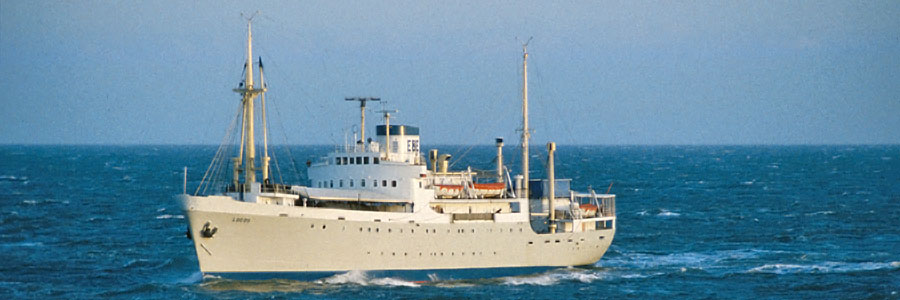
Now since I am giving you a love story, quoting facts and statistics about the ships would not suffice. Instead, I want you to understand the impact the ships’ arrival and presence has made and continues to make in Caribbean society. My first trip on a Logos Ship was in 1994 when the MV Logos II docked in Kingstown, St Vincent and the Grenadines. My Father, who had experienced visiting both the MV Logos and MV Doulos Phos, wanted me to experience being on the World’s most formidable floating book fair. Entering one of the ships for the first time is quite surreal and exciting, especially as a child who, at the time, was growing up in a society and did not know anything about the Internet, Social Media and universal access to Cellphone usage. Instead, it was still a society, though in transition, that relied heavily on books for knowledge, insight and inspiration.
I grew up as a young boy interested in science, history, and music. I loved animals, topics on space exploration, and Geography (maps and stuff). The MV Logos II fed such a need and desire in a young child, bringing books that we in the islands (with Jeff Bezos still years away from creating Amazon.com) would not have had access to otherwise. The books that I read from these ships taught me about Kangaroos in an Island-Continent called Australia, located on the other side of the planet. Speaking about planets, there were books that taught me about the (then) nine planets (now eight) in the Solar system. These books highlighted the various Space missions of the U.S.A and the U.S.S.R. and both the disastrous and victorious outcomes. I even got my very first Atlas from the ship, where I was able to learn about the different countries all around the world and how to locate them. The MV Logos II also introduced me to my first Children’s Bible, which later on strengthened my very own faith in Christ.
So, now that I have expressed myself there, how would the ships’ visits have helped foster a Love Story not just with me but with an entire region? Lets look at four contributing factors to this Love Story.
#1 The Timing of the Ship’s Arrival

(picture credit: exhibitions.nypl.org)
I always say that, whether you choose to observe it or not, Timing has been essential and consequential in History playing out the way it has. The G.B.A Ships came to the Caribbean in the late 1970’s. During this period of time, many Caribbean Islands were seeking Political Independence from their Colonial European Heads. This was particularly the case in the Lesser Antilles, as the Greater Antillean Islands (besides Puerto Rico) along with Trinidad and Tobago, Barbados and Guyana had already obtained Independence. The Lesser Antilles were hungry for such independence and even the now-independent islands and mainland territories were hungry for knowledge and insight. The entrance of the G.B.A. Ships provided an avenue for Caribbean Island Populations to access knowledge and insight in various topics of interest at a time when there was need for insight in a region that was still trying to cope from the pressures of Slavery. Many Caribbean nationals can attest to the fact that their love for Politics, Law, Medicine, Science, Teaching, Pastoral ministry, and Sports, was birthed or intensified while on a visit to one of these ships.
#2 The Caribbean’s welcoming atmosphere
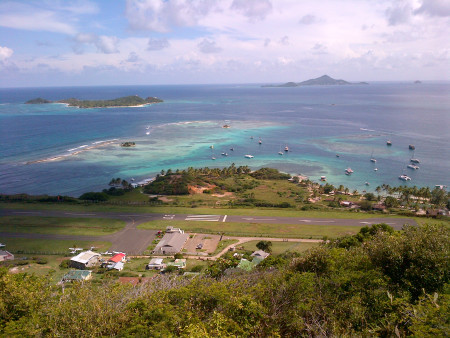
From the weather, to the people, to the legislation and policies; the Caribbean is a wonderful place to visit and live in. Caribbean ports have and still are very welcoming to ships in an effort to promote one of the region’s backbone industries; Tourism. Docking prices are not exorbitant and security is usually provided. Added to that, the Climate of the region is welcoming, especially for many volunteers and crew on the ships that have been either confined on sea for long period of time while travelling to the Caribbean, or they are from cold, northern regions. The sunshine of the region would be appreciated.
#3 The Provision of Resources, Outreach and Assistance
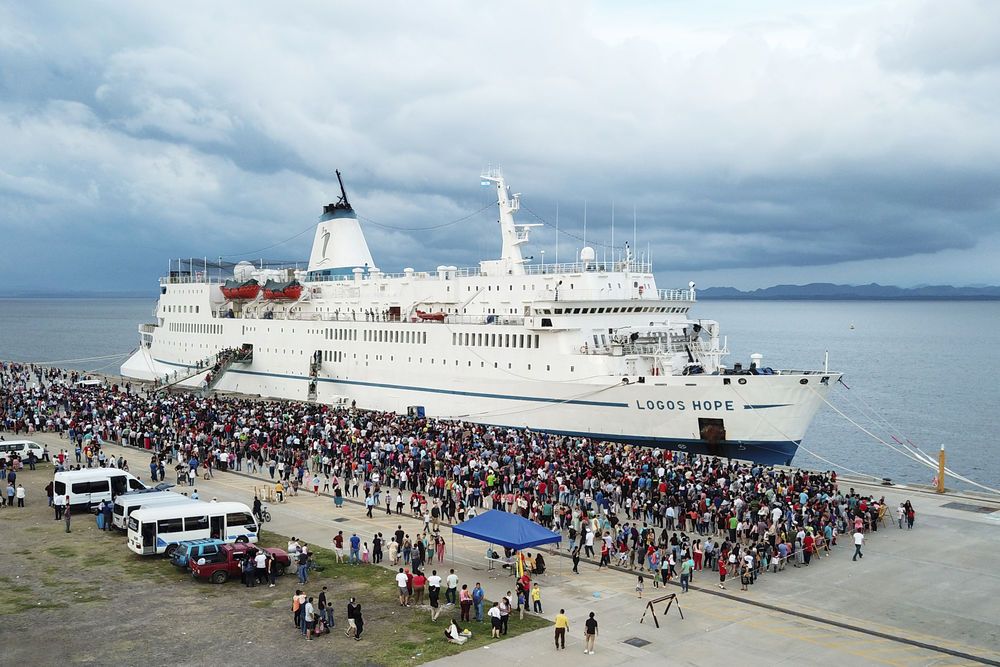
The G.B.A. Ship crews have, for years, helped in the distribution of books, music and other resources. They have also been involved in various infrastructural and social outreach projects throughout the islands. From building homes to hospital and geriatric home visits, even to school, church and community visits; their impact is felt. The ships have also been able to host various training events, both on board the vessel and in different places, such as churches, schools, and other venues, without hindrance. The ships also utilize locals as volunteers to assist them with their tasks while being docked at any particular port.
#4 The Ships’ “Cultural Icon” status

Unlike many other countries, Caribbean islands are relatively small. Therefore, when the ships arrived, their impact would have been felt more on a national level than just on a city or town level. In St Vincent and the Grenadines, for example, the crews from the Logos ships over the years have been able to visit settlements ranging from the north of the island of St Vincent to settlements in the individual Grenadine islands, all within a 2 week period. This is as opposed to visiting Sao Paulo (Brazil), Lagos (Nigeria), or Manila (Philippines), which are all huge cities that would require, by themselves, a little over a 2 week visit. Having a national impact in the Islands meant that they became more recognized among the populace. This would therefore lead to the creation of the Logos ships as “cultural icons” and not necessarily as just visiting ships. This point is particularly important and has helped in building a national, and personal, anticipation and feeling of nostalgia whenever then ship arrives.
Conclusion: Love Story or not?
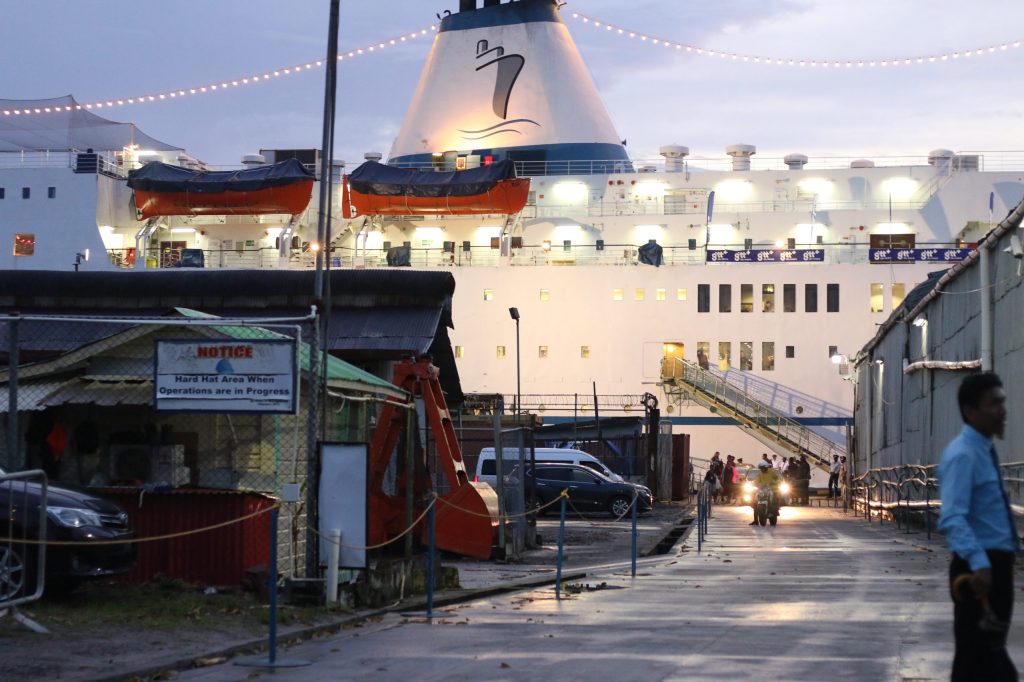
As you read this, you may say or think that “Love Story” may be too much of a strong term, or, maybe it actually isn’t. Maybe it truly shows the impact of the ships in Caribbean society, or maybe I’m just looking too deeply into it (or am I?!). One thing is clear; we love to see the ships. Another thing is clear; the ships’ impact has been somewhat of an untold story. Many people see them come, enjoy their presence, and see them go. The memory of their visit would then be mentioned in a recollection of thoughts and within an atmosphere of nostalgia, until the announcement of their arrival is made once again.
At the time that this article was written, the Logos Hope is in the Caribbean, making one more tour of the region before heading to Trinidad and Tobago to be dry-docked, in preparation for its next voyage. This is also the 10th year of the Logos Hope’s operation on the seas and it has already added to the legacy that its predecessors have created. Maybe the existence of this Love Story might not be admitted openly by a particular Caribbean society or even by an individual. However, deep down inside at the heart, and as seen in the joy and anticipation of the public, and as witnessed in the national mobilization to assist the ship with it’s ministry, even as you gaze at the ships logo blazed across it’s exhaust, evident over a Caribbean city skyline, you do feel the love and nostalgia being rekindled over again.
Sources
GBA Ships official Website (English) – https://www.gbaships.org/en/
 Beacon Of Flavor